

Tucked into the hills of Griffith Park in Los Angeles, the Autry Museum of the American West stands as one of the most comprehensive institutions dedicated to exploring the complex, often contradictory narrative of the American frontier. Founded by Gene Autry—the singing cowboy who became a cultural icon—the museum has evolved far beyond its original vision to become a scholarly institution that confronts both the romance and the brutal realities of westward expansion.
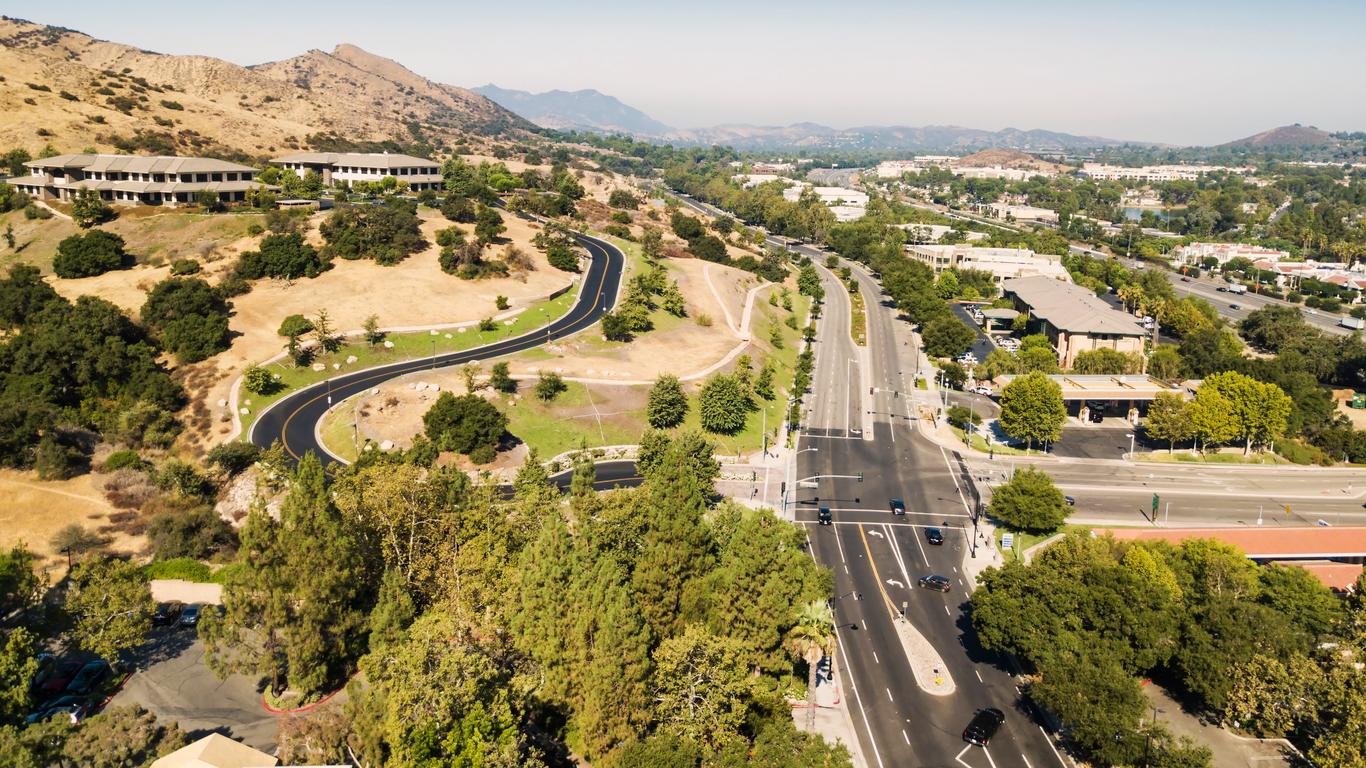
The museum’s location itself carries significance. Griffith Park, a sprawling urban wilderness in the heart of Los Angeles, represents the modern intersection of natural landscapes and metropolitan sprawl that defines much of the contemporary West. Visitors ascending the winding roads to reach the museum pass through eucalyptus groves and hiking trails, a reminder that the frontier exists not merely as historical artifact but as living geography.
The Vision of a Cowboy Capitalist
Gene Autry’s decision to establish this museum stemmed from a lifetime spent embodying and profiting from Western mythology. As one of the first multimedia entertainers, Autry built an empire on cowboy imagery—from radio shows and films to television programs and recordings. His 1988 founding of what was initially called the Gene Autry Western Heritage Museum reflected both nostalgia and a genuine desire to preserve the material culture of the American West.
Autry understood something fundamental about American identity: the West functions as our national mythology, the place where we locate our stories of individualism, freedom, and reinvention. Yet he also recognized that this mythology required examination. The museum he created would need to hold space for both the romanticized version he had helped perpetuate and the harder truths that version often obscured.
The institution underwent significant transformation in 2003 when it merged with the Southwest Museum of the American Indian, expanding its collection and deepening its commitment to Indigenous perspectives. This merger marked a crucial evolution, acknowledging that any honest reckoning with Western history must center the voices and experiences of those who were displaced, dispossessed, and systematically marginalized by westward expansion.
Collections That Challenge and Complicate
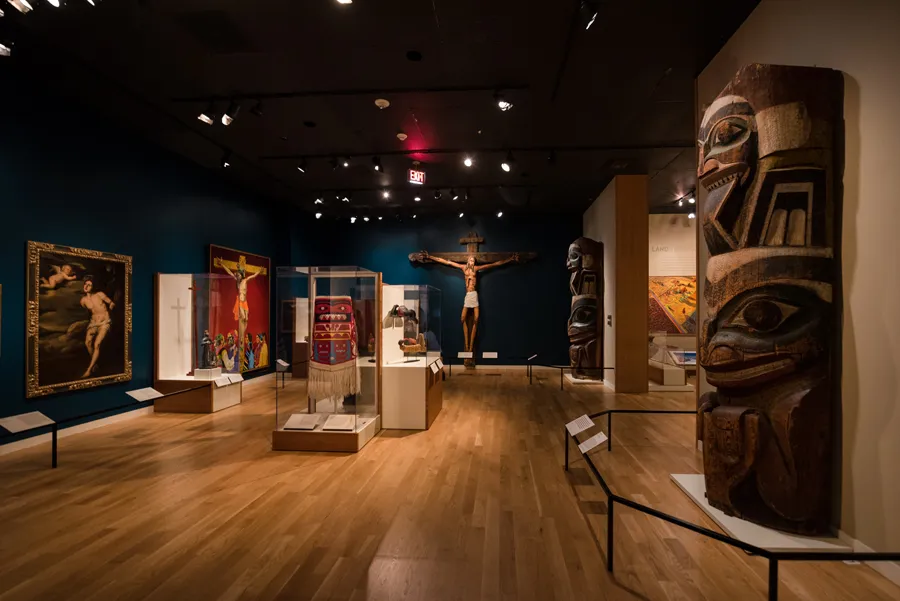
Walking through the Autry’s galleries means confronting the full spectrum of Western material culture. The collections span from pre-contact Indigenous artifacts to contemporary art, from Spanish colonial objects to Hollywood memorabilia. This breadth creates productive tensions that force visitors to reconsider their assumptions.
The firearms collection alone tells multiple stories. Historic weapons represent technological advancement, military campaigns, law enforcement, criminal activity, personal protection, and mass violence against Indigenous peoples. A Colt revolver is simultaneously a marvel of 19th-century manufacturing, a tool of frontier survival, and an instrument of genocide. The museum doesn’t shy from this complexity.
Similarly, the extensive holdings of Western art include both the romantic paintings of Albert Bierstadt and the more critical contemporary works of artists like Fritz Scholder and Wendy Red Star. Bierstadt’s luminous landscapes of Yosemite and the Rocky Mountains present nature as sublime and untouched, erasing the Indigenous peoples who had shaped those landscapes for millennia. Contemporary Native artists reclaim that narrative space, using irony, direct address, and formal innovation to assert their continuing presence and creativity.
The costume and textile collections reveal how identity was performed and policed on the frontier. Elaborate Victorian dresses worn by wealthy women in California mining towns sit near the simpler clothing of Chinese laborers who built the transcontinental railroad. Cowboy gear—from working ranch equipment to Hollywood costume pieces—demonstrates how functional objects became symbols laden with meaning about masculinity, freedom, and American character.
Rethinking the Cowboy Myth
The Autry’s approach to cowboy culture exemplifies its broader methodology. Rather than simply celebrating or debunking the mythology, the museum explores how and why these stories took hold of the American imagination. The cowboy, after all, was largely a working-class laborer, often Black, Mexican, or Indigenous, performing grueling work for minimal pay. The transformation of this figure into an icon of rugged individualism and white masculinity represents a profound cultural alchemy.
Gene Autry himself embodied this transformation. His film and television persona—the singing cowboy who always got the girl and never shot to kill—represented a sanitized, domesticated version of frontier violence. Yet this very sanitization made Western mythology palatable for mass consumption, spreading its influence even further into American culture. The museum’s holdings of Autry’s own career materials allow for meta-commentary on this process of mythmaking.
The institution has worked to recover the stories of real cowboys whose experiences diverged dramatically from the Hollywood version. Black cowboys like Nat Love and Bill Pickett, who were among the most skilled riders and ropers of their era, receive prominent placement. The contributions of vaqueros—the Mexican horsemen whose techniques and equipment formed the foundation of American cowboy culture—are thoroughly documented. These correctives don’t eliminate the mythology but add necessary dimensions to it.
Indigenous Voices and Perspectives
Perhaps the most significant evolution in the Autry’s mission has been its commitment to Indigenous perspectives. The merger with the Southwest Museum brought extensive collections of Native American art and artifacts, but more importantly, it prompted institutional soul-searching about how to present these materials ethically and accurately.
The museum has embraced collaborative curation, working directly with tribal communities to interpret objects and tell stories. This approach recognizes that Indigenous peoples are not historical relics but living communities with sovereign rights to their own narratives. Contemporary Native artists are commissioned for new works, and tribal consultants advise on everything from object labels to exhibition design.
This commitment extends to confronting uncomfortable truths about conquest and genocide. The California Indian galleries, for instance, document the devastating impact of Spanish missions, Mexican secularization, and American statehood on Indigenous populations. The museum presents evidence of systematic violence, cultural suppression, and land theft without euphemism or evasion. Yet it also emphasizes Indigenous resistance, adaptation, and survival—refusing the narrative of vanishing peoples that has long characterized Western historiography.
The inclusion of contemporary Indigenous perspectives challenges visitors to recognize that Native communities continue to shape the West. Artists, activists, politicians, and scholars of Indigenous descent are redefining what it means to be Western and American. Their presence in the museum disrupts any notion that the frontier represents a closed historical chapter.
The Chinese American Experience
The Autry has also worked to illuminate the experiences of Chinese immigrants and Chinese Americans in shaping the West. Often relegated to footnotes in Western history, Chinese laborers were essential to the region’s development, particularly in railroad construction, mining, and agriculture. Yet they faced brutal discrimination, including the Chinese Exclusion Act of 1882, which marked the first time the United States banned an entire ethnic group from immigrating.
The museum’s exhibitions on Chinese American experiences present both hardship and achievement. Objects range from tools used by railroad workers to the elegant clothing and household goods that Chinese merchants and their families used to establish communities throughout California and beyond. Photographs document the formation of Chinatowns as spaces of cultural preservation and mutual support in the face of violent hostility.
These galleries also explore how Chinese Americans navigated and challenged their exclusion from full citizenship. The stories of individuals who fought discriminatory laws, built successful businesses despite legal barriers, and maintained cultural traditions while adapting to American society add crucial complexity to Western narratives.
Women Who Shaped the Frontier
The Autry has made significant efforts to recover women’s stories from the historical record. Western mythology tends toward hyper-masculinity, but women were instrumental in settlement, community-building, and cultural development. The museum’s collections and exhibitions explore the diverse experiences of women across racial, class, and cultural lines.
Frontier women’s letters, diaries, and photographs reveal the daily realities of westward migration and settlement. These documents capture loneliness, fear, and exhaustion alongside determination, hope, and accomplishment. They also reveal how women navigated limited legal rights, dangerous conditions, and social isolation while raising families and contributing to household economies.
The museum doesn’t shy from controversial figures. Calamity Jane, Pearl Hart, and other women who defied Victorian gender norms receive attention alongside schoolteachers, homesteaders, and activists. The legendary sharpshooter Annie Oakley appears not as a curiosity but as a skilled professional who challenged assumptions about women’s capabilities.
Indigenous, Mexican, and Chinese women’s experiences receive particular attention, recognizing that race and class profoundly shaped women’s lives in the West. These intersecting identities created both additional burdens and unique forms of resistance and community.
Hollywood and the Manufacturing of the West
One of the Autry’s most distinctive features is its extensive exploration of how Hollywood shaped and distorted Western history. The museum’s holdings include costumes, props, scripts, and promotional materials from decades of Western films and television shows. This collection allows for critical examination of how entertainment media created and perpetuated specific visions of the frontier.
The shift from silent Westerns through the Classical Hollywood era to Spaghetti Westerns and revisionist films traces changing American attitudes toward violence, race, and national identity. Early films often presented uncomplicated narratives of civilization versus savagery, with white settlers as heroes and Indigenous peoples as obstacles. Later films began questioning these assumptions, though often still within problematic frameworks.
The museum explores how actors like John Wayne became synonymous with American identity itself, their fictional personas blurring with reality in the public imagination. It also recovers the contributions of actors of color who were relegated to stereotypical roles or excluded entirely from major productions. The contrast between Hollywood’s version of the West and the historical reality it supposedly depicted becomes a subject of analysis rather than an inconvenient contradiction to be ignored.
Contemporary Western films and television shows continue this dialogue, with some productions working to present more inclusive and accurate visions of frontier history. The Autry tracks these developments, recognizing that our stories about the past remain sites of cultural contestation and meaning-making.
Environmental and Ecological Perspectives
In recent years, the Autry has expanded its focus to include environmental history and ecology. This approach recognizes that the story of the American West cannot be separated from questions about land use, resource extraction, and human relationships with non-human nature.
Exhibitions explore how different communities understood and interacted with Western landscapes. Indigenous land management practices, including controlled burning and sustainable harvesting, are presented as sophisticated ecological knowledge rather than primitive techniques. Spanish colonial ranching and mission agriculture introduced new species and land use patterns that permanently altered ecosystems. American mining, logging, and industrial agriculture intensified environmental transformation, often with devastating consequences.
The museum also addresses contemporary environmental challenges facing the West: water scarcity, wildfire, urban sprawl, and climate change. These issues connect directly to historical patterns of settlement and resource exploitation, demonstrating that the frontier past remains relevant to present concerns.
This ecological lens adds another dimension to familiar Western narratives. The cowboy becomes not just a cultural icon but an agent in the transformation of grassland ecosystems. The prospector’s quest for gold reveals itself as environmentally destructive extraction that left toxic legacies. The homesteader’s plow represents both agricultural productivity and the disruption of Indigenous land relationships.
Architecture and Physical Space
The museum building itself, designed by the architectural firm of Welton Becket and Associates and expanded over the years, reflects evolving ideas about how to present Western history. The original Spanish Colonial Revival architecture evoked California’s mission heritage, a romantic vision that itself requires critical examination given the missions’ role in Indigenous subjugation.
More recent additions have taken different approaches. The expansion galleries incorporate contemporary design elements and create spaces specifically suited for temporary exhibitions that can respond to current scholarship and community interests. The physical layout encourages visitors to move between different time periods and cultural perspectives rather than following a single linear narrative.
Outdoor spaces connect the museum to the surrounding landscape of Griffith Park. Sculptures and installations in the courtyard and gardens provide opportunities for reflection and serve as gathering places for community events. These spaces acknowledge that Western history isn’t confined to galleries but exists in continuing relationship with land and environment.
Educational Programs and Community Engagement
The Autry’s education programs extend its mission beyond the walls of the museum. School groups participate in hands-on activities that introduce historical thinking skills and multiple perspectives. Rather than memorizing dates and names, students engage with primary sources, consider different viewpoints, and develop their own interpretations.
Public programming includes lectures, film series, concerts, and festivals that bring diverse communities into conversation. The annual Dia de los Muertos celebration, for instance, honors Mexican and Mexican American cultural traditions while acknowledging California’s complex history of conquest and resistance. Western film screenings often include scholarly introductions that contextualize the films within their historical moments and ongoing cultural impact.
The museum has also worked to become a gathering place for contemporary Indigenous communities, hosting cultural events, language classes, and political organizing. This commitment recognizes that museums historically functioned as colonial institutions that appropriated and displayed Indigenous cultural materials without consent or compensation. By sharing institutional space and resources with Native communities, the Autry attempts to move toward more equitable relationships.
Ongoing Challenges and Controversies
Despite its evolution, the Autry continues to navigate tensions inherent in presenting Western history. Some visitors arrive expecting uncomplicated celebration of frontier mythology and feel alienated by exhibitions that challenge their assumptions. Others argue that the museum still doesn’t go far enough in confronting the violence and dispossession at the heart of westward expansion.
The question of how to display objects remains contentious. Some Indigenous cultural items are sacred or ceremonial and were never meant for public viewing. The museum has repatriated certain objects to tribal communities and removed others from display in consultation with Indigenous advisors. Yet thousands of items remain in the collections, raising ongoing questions about access, ownership, and the ethics of museum practice.
The Autry’s connection to Gene Autry’s legacy also generates debate. Some argue that an institution founded by and named for an entertainer who profited from Western mythology can never fully escape that origin story. Others see the museum’s evolution as demonstrating how institutions can grow beyond their founders’ visions and engage in genuine self-critique.
Conclusion: History as Living Conversation
The Autry Museum of the American West succeeds not by providing definitive answers about Western history but by creating space for productive disagreement and ongoing dialogue. It recognizes that the West remains contested ground—physically, politically, and symbolically. The stories we tell about frontier history continue to shape contemporary debates about immigration, racial justice, environmental protection, and American identity.
By presenting multiple perspectives, the museum refuses simple narratives of progress or decline. It shows the West as simultaneously brutal and beautiful, a place of terrible violence and remarkable resilience, of crushing conformity and radical possibility. Indigenous peoples endured genocide yet maintained cultural continuity. Immigrants faced discrimination yet built thriving communities. Women operated within severe constraints yet carved out spaces for agency and influence.