

The Natural History Museum of Los Angeles County stands as one of the most significant scientific and cultural institutions in the western United States. Located in Exposition Park, just south of downtown Los Angeles, this 105-year-old institution houses more than 35 million specimens and artifacts spanning 4.5 billion years of history. It serves not merely as a repository of natural wonders but as an active research facility where scientists continue to make groundbreaking discoveries about our planet’s past, present, and future.
A Legacy Built on Scientific Curiosity
The museum opened its doors in 1913, though its origins trace back to 1910 when civic leaders recognized Los Angeles needed a world-class natural history institution befitting its growing stature. The original Spanish Renaissance Revival building, designed by architects Hudson and Munsell, became an architectural landmark in its own right. The structure’s imposing facade, with its rotunda and grand entrance, announced to visitors that they were about to embark on a journey through deep time and across continents.
From its inception, the museum embraced a dual mission: to conduct serious scientific research while making natural history accessible and engaging to the general public. This philosophy has guided the institution through more than a century of evolution, expansion, and innovation. Today, it remains one of the few major museums in the country where active research laboratories sit adjacent to public exhibition halls, allowing visitors to witness science in action.
The Collections: An Embarrassment of Riches
The museum’s collections are staggering in their scope and significance. With 35 million specimens, it ranks among the top natural history collections globally. These holdings span every major branch of natural science, from paleontology and mineralogy to ornithology and entomology.
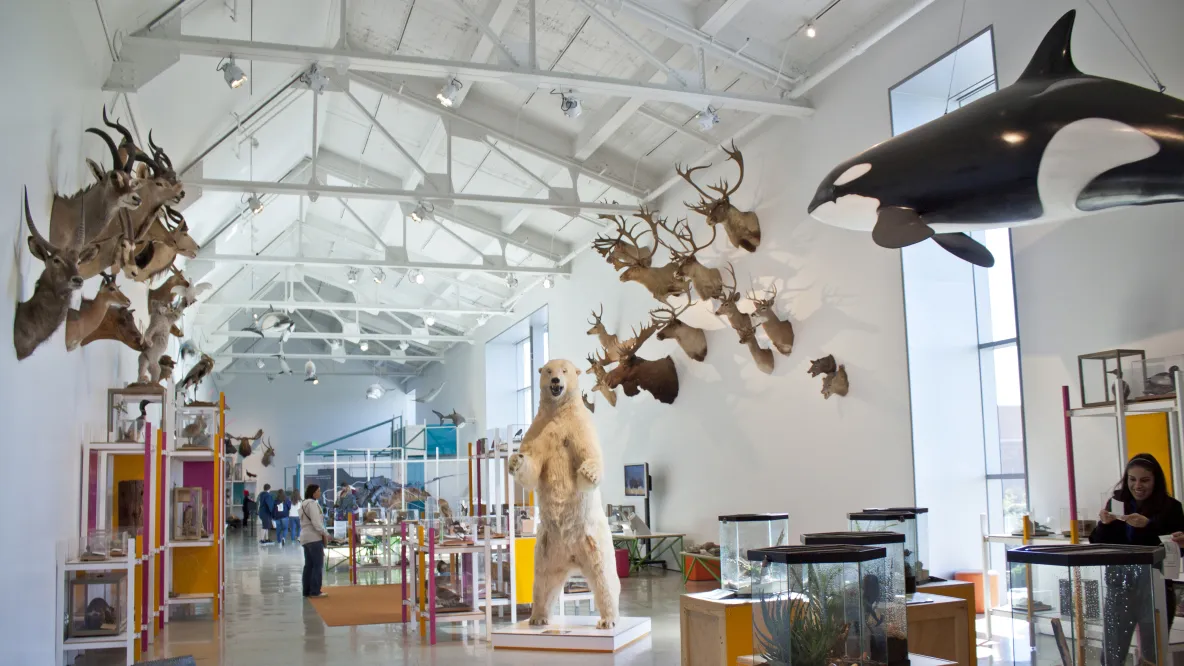
The mammalogy collection alone contains over 200,000 specimens, making it one of the most comprehensive in North America. These aren’t merely display pieces gathering dust in storage; researchers from around the world regularly request access to study specific specimens, contributing to our understanding of evolution, biogeography, and conservation biology.
The entomology collection houses approximately 5 million insects, including type specimens that serve as the definitive references for thousands of species. Some of these insects were collected over a century ago, yet they continue to yield new insights as modern analytical techniques allow scientists to extract DNA and other biological information that early collectors never imagined possible.
Perhaps most impressive is the paleontology collection, which includes over 4 million fossil specimens. From microscopic foraminifera to massive dinosaur bones, these fossils tell the story of life on Earth across geological epochs. The museum has been particularly active in excavating fossils from the nearby La Brea Tar Pits, creating one of the most complete records of Ice Age fauna anywhere in the world.
The Dinosaur Halls: Where Giants Walk Again
The Dinosaur Institute and its associated exhibition halls represent the museum’s most celebrated public face. These galleries underwent a massive $60 million renovation that was completed in 2011, transforming them into state-of-the-art exhibition spaces that present paleontology in revolutionary ways.
Unlike traditional museums that display dinosaur skeletons in static poses, the Natural History Museum of Los Angeles County presents its specimens in dynamic arrangements that suggest movement and behavior. A striking example is the Tyrannosaurus rex growth series, which displays three T. rex specimens of different ages—a juvenile nicknamed “Baby,” a young adult called “Thomas,” and an adult named “Trix.” This unprecedented display allows visitors to observe how these apex predators changed dramatically as they matured, a scientific narrative that single-specimen displays cannot convey.
The Dinosaur Hall also features an impressive Triceratops confronting the adult T. rex in a frozen moment of predator-prey interaction. The arrangement, based on fossil evidence and biomechanical studies, brings the Cretaceous period to life without resorting to animatronics or artificial reconstructions. The bones themselves, properly interpreted and artfully displayed, tell a compelling story.
One of the gallery’s most scientifically significant features is its emphasis on showing actual fossils rather than casts. While many museums rely primarily on replicas, the Natural History Museum displays original specimens whenever possible, allowing visitors to stand before genuine remnants of creatures that lived millions of years ago. This authenticity creates a visceral connection that no reproduction can match.
The Age of Mammals: Beyond the Dinosaurs
While dinosaurs understandably capture much of the public’s attention, the museum’s Age of Mammals exhibition deserves equal acclaim. This gallery traces the evolution of mammals from tiny shrew-like creatures that scurried beneath the feet of dinosaurs to the diverse array of mammals that dominate modern ecosystems.
The exhibition tells a nuanced story about evolution, extinction, and adaptation. It explores how mammals exploited new ecological niches after the end-Cretaceous extinction event 66 million years ago, diversifying into forms ranging from whales and bats to horses and humans. The display of transitional fossils—species that show characteristics of two different groups—provides tangible evidence of evolutionary processes that skeptics often claim don’t exist in the fossil record.
One particularly effective display shows the evolution of horse ancestors, from the dog-sized Hyracotherium to modern Equus. By presenting a series of skeletons showing gradual changes in body size, toe structure, and tooth morphology, the exhibition makes evolution comprehensible in a way that textbook descriptions cannot achieve.
Gems and Minerals: The Earth’s Hidden Treasures
The Gem and Mineral Hall showcases some of the most spectacular geological specimens in North America. This collection includes over 150,000 mineral specimens, 2,000 gems, and extensive holdings of meteorites that have fallen to Earth from space.
The centerpiece of the collection is undoubtedly the spectacular display of gold specimens from California and around the world. Given Los Angeles County’s historical connection to the California Gold Rush, this collection has both scientific and cultural significance. The crystalline gold specimens, some weighing several pounds, demonstrate how this precious metal forms in nature—far different from the refined bars most people envision.
The meteorite collection deserves special attention. These visitors from space provide crucial information about the formation of our solar system and the building blocks of planets. Some of the museum’s meteorites are older than Earth itself, containing minerals and chemical compounds that predate the formation of our planet. When you stand before a meteorite at the museum, you’re quite literally looking at something older than the ground beneath your feet.
The gem collection sparkles with both natural and cut stones, including some extraordinarily rare specimens. Educational displays explain how gems form, why they display their characteristic colors, and how human cultures have valued them throughout history. The intersection of geology, chemistry, and cultural history makes this one of the museum’s most interdisciplinary galleries.
Nature Gardens: Where Indoor Meets Outdoor
In 2013, the museum opened the Nature Gardens, a 3.5-acre outdoor living exhibition that extends the museum experience beyond its walls. This space represents a significant philosophical shift in museum thinking, acknowledging that natural history isn’t confined to fossils and preserved specimens—it’s alive and happening right now.
The Nature Gardens function as both a living laboratory and a demonstration of sustainable urban ecology. The space includes native plant communities from across California, from coastal sage scrub to riparian woodlands. These plantings attract native birds, insects, and other wildlife, creating functioning ecosystems within an urban environment.
A pond and stream system demonstrates aquatic ecology while providing habitat for native fish, amphibians, and invertebrates. Educational signage throughout the gardens explains ecological concepts like food webs, nutrient cycling, and habitat requirements, making abstract scientific principles concrete and observable.
Perhaps most importantly, the Nature Gardens serve as a model for sustainable landscape design in a semi-arid climate. With California facing ongoing water challenges, the gardens demonstrate how beautiful, functional landscapes can thrive with minimal irrigation by using native plants adapted to local conditions. Thousands of homeowners and landscape professionals have visited seeking ideas they can implement in their own properties.
The Spider Pavilion: Eight-Legged Wonders
Each year from late September through November, the museum opens its seasonal Spider Pavilion, an outdoor exhibit featuring live spiders in their natural behaviors. This exhibition takes courage to visit but rewards those who overcome their arachnophobia with fascinating insights into spider biology and ecology.
Inside the pavilion, dozens of spider species create webs, hunt prey, and go about their daily activities while visitors walk among them on elevated pathways. Educational interpreters stationed throughout the exhibit answer questions and help visitors appreciate these often-maligned arthropods.
The Spider Pavilion serves an important conservation message. Many spider species face threats from habitat loss and pesticide use, yet they play crucial roles in ecosystems by controlling insect populations. By allowing people to observe spiders up close in semi-natural conditions, the museum helps visitors overcome fear-based prejudices and develop appreciation for ecological complexity.
Research That Matters
Behind the scenes, the Natural History Museum operates as a serious research institution. The museum employs dozens of scientists who conduct fieldwork, publish in peer-reviewed journals, and train the next generation of natural historians. These researchers don’t merely study historical specimens; they conduct ongoing field studies and contribute to our understanding of contemporary environmental challenges.
The museum’s Urban Nature Research Center exemplifies this applied research mission. Scientists affiliated with this center study biodiversity in Los Angeles and other urban areas, documenting how wildlife adapts to city environments and how urban design affects ecological health. This research has direct implications for city planning, conservation policy, and human wellbeing in an increasingly urbanized world.
The museum also houses the Dinosaur Institute, a research group dedicated to paleontology. Scientists from this institute conduct field expeditions to dig sites across the western United States and beyond, discovering new species and gaining insights into ancient ecosystems. Many of the specimens they collect eventually make their way into public displays, creating a direct pipeline from scientific discovery to public education.
Community Engagement and Education
The Natural History Museum recognizes that its mission extends beyond research and exhibitions. It operates extensive educational programs serving students from preschool through graduate school. School groups from across Southern California visit the museum for curriculum-aligned programs that bring science education to life.
The museum’s educational philosophy emphasizes hands-on learning and direct observation. Rather than passive lectures, programs encourage students to examine real specimens, ask questions, and engage in scientific thinking. Programs like the overnight “Dino Snores” allow children to sleep among the dinosaurs, transforming the museum into an immersive learning environment.
For adult learners, the museum offers lectures, workshops, and special events featuring leading scientists and authors. These programs maintain the institution’s role as a community gathering place for intellectual discourse, continuing a tradition of public science education that dates back to the museum’s founding.
The La Brea Tar Pits Connection
While technically a separate site, the La Brea Tar Pits maintain close institutional ties to the Natural History Museum. The tar pits, located in Hancock Park just a few miles from the museum, represent one of the world’s most significant Ice Age fossil sites. For tens of thousands of years, natural asphalt seeps trapped animals ranging from mammoths and saber-toothed cats to dire wolves and ground sloths.
Museum scientists have been excavating the tar pits since 1913, recovering over 3.5 million fossils representing more than 650 species. This extraordinary record provides a detailed picture of Southern California’s environment between 50,000 and 10,000 years ago. The connection between the La Brea discoveries and the museum’s collections creates a compelling narrative about local natural history, making deep time feel immediate and relevant to Los Angeles residents.
Facing the Future
As the Natural History Museum of Los Angeles County moves further into the 21st century, it faces both challenges and opportunities. Climate change, biodiversity loss, and environmental degradation demand that natural history museums serve not merely as repositories of the past but as advocates for the future.
The museum has embraced this challenge by incorporating conservation messages throughout its exhibitions and programs. Displays connect historical extinctions to contemporary conservation crises, using the past to illuminate present challenges. The institution strives to inspire visitors not just to appreciate natural history but to act as stewards of the planet’s future.
Recent initiatives emphasize community science, engaging the public in actual research projects. Through programs that allow non-scientists to contribute observations and data, the museum democratizes science while expanding the scale of research that can be conducted. These efforts recognize that solving 21st-century environmental challenges requires broad public engagement, not just expert study.
A Living Institution
The Natural History Museum of Los Angeles County succeeds because it remains dynamic and responsive. Unlike some museums that feel frozen in time, this institution constantly evolves, incorporating new discoveries, adopting new interpretive techniques, and addressing contemporary concerns. The dinosaurs and minerals aren’t going anywhere, but how they’re presented and what stories they tell continue to develop.
For researchers, it offers collections and laboratory facilities supporting cutting-edge science. For students, it provides educational experiences that inspire future scientists and informed citizens. For families, it delivers weekend entertainment that educates while it engages. For the broader community, it serves as a reminder of our connection to the natural world and our responsibility toward it.
Standing in the museum’s galleries, surrounded by evidence of life’s extraordinary diversity and resilience across billions of years, visitors encounter perspective. The dinosaurs that dominated Earth for 165 million years are gone. The mastodons and saber-toothed cats that prowled Ice Age Los Angeles are extinct. Yet life persists, adapts, and diversifies. The museum helps us understand that we are part of this ongoing story, not separate from it—a message that has never been more urgent or more necessary.