


There is a canyon tucked between Whittier and Hacienda Heights, less than twenty miles east of downtown Los Angeles, that most of the country has never heard of. It doesn’t have the postcard recognition of Malibu or the Hollywood mystique of Griffith Park. It doesn’t appear on most tourist itineraries, and it rarely makes the lists that travel magazines produce every January. But ask anyone who grew up in the San Gabriel Valley about Turnbull Canyon, and watch what happens to their face. Something shifts. The eyes get a little distant. There’s often a pause before they say anything at all.
That reaction is the whole story, really. Turnbull Canyon is two places at once. In daylight, it is one of the finest moderate hikes in Los Angeles County — a genuinely lovely stretch of coastal sage, sycamore woodland, and ridge-top panoramas that can leave you breathless in the best possible way. After dark, it is something else entirely. It is a place with enough accumulated history, legend, tragedy, and rumor to fill several long winters’ worth of campfire conversation.
Both versions are real. That’s what makes it worth writing about.
The Land Before the Name
Turnbull Canyon was named after Scottish immigrant Robert Turnbull, who bought the canyon from Quaker businessmen in Whittier in the 1870s to raise sheep. But the land had a name long before any Scottish shepherd set eyes on it.
In the early Spanish Colonial Period, several Tongva Native Americans were supposedly put to death at Turnbull Canyon for rebelling against the Spanish and Franciscan Friars at the nearby Mission San Gabriel. As a result, the canyon was given the name “Hotuuknga,” meaning “the place of darkness and death.” Whether that name was assigned in grief or warning, it stuck in the oral tradition of the people who had lived here for generations before the missions arrived.
The Gabrielino Indians believed that the land was forbidden ground. They called it “Hutukngna” — the Dark Place, or the Place of the Devil. These were battlegrounds for Native American wars, and the indigenous people were forced to convert to Catholicism by the Spanish. During this time, Indians reportedly saw witches and ghosts.
What we now call Turnbull Canyon passed through several hands during the turbulent land-grant era of nineteenth-century California. In the mid-1840s, William Workman became captain of a cadre of Americans and Europeans serving with Governor Pio Pico in his fight during the Mexican-American War. Following the battles, Pio Pico was appointed governor of Alta California and awarded Workman 49,000 acres of land, which included what is now Turnbull Canyon. The arrangement didn’t bring Workman lasting fortune. He was involved in a plot to illegally take over the governor’s position — the same governor who had given him his land. As a result, he lost most of his 49,000 acres and was left with Turnbull Canyon. This led to financial ruin, followed by Workman shooting himself in 1876.
As for Robert Turnbull himself, the man the canyon was eventually named for, his story ends badly too. He later sold the land back to the Quakers in the 1880s for a profit, but his luck ran out shortly after when he was murdered in town. The Quakers decided to name the canyon after Robert in his honor. There’s something almost darkly comedic about that — a man killed under mysterious circumstances being memorialized in the name of a place that would go on to accumulate one of the strangest reputations in California.
The Canyon in Daylight: A Hiker’s Honest Assessment
Set aside the ghost stories for a moment, because the canyon genuinely deserves its reputation as a hike.
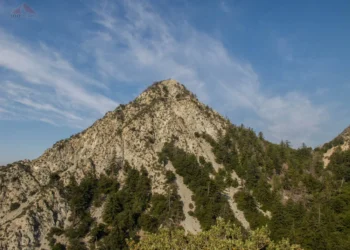
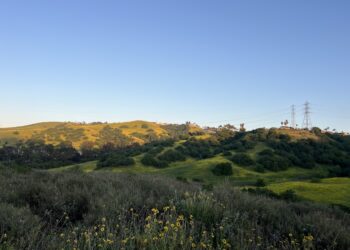
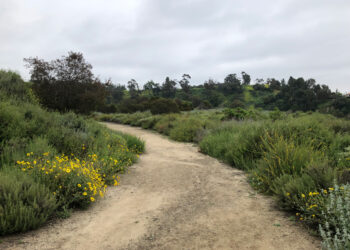
Turnbull Canyon near Whittier, California is an east-west canyon with relatively steep drainage. The canyon has a creek at its bottom that supports a narrow strip of riparian woodland dominated by sycamore trees, while the slopes are covered in coastal sage and native and non-native grasses. The Puente Hills Preserve has a four-mile loop trail that lies in the northern-central part of the preserve.
Today, the Habitat Authority manages 3,680 acres in the Puente Hills, and many of the trails are popular with hikers, trail runners, equestrians, and mountain bikers. The loop route is an excellent introduction to the canyon and the Puente Hills in general, and will likely surprise Angelenos who are convinced there’s no good hiking between the San Gabriels and Santa Anas.
The trailhead sits on Turnbull Canyon Road east of Whittier, and the approach is deceptively gentle. The first 0.7 miles follow Turnbull Canyon Trail with a very gradual 200-foot elevation gain. The canyon floor here feels tucked away from the world — the sycamores overhead create a patchy canopy, and the creek, when it’s running, makes enough noise to drown out the distant sound of traffic. It’s easy to forget you’re a short drive from one of the most congested metro areas on earth.
The climb changes things. The Sumac Trail winds uphill on what begins as broken asphalt fire road. The asphalt eventually gives way to dirt, and at 1.5 miles, meets up with the Skyline Drive fire road. From here, views open up in all directions. On a clear morning after a rainstorm has washed the smog from the air, you can see the full sweep of the San Gabriel Mountains to the north, with glimpses south into Orange County. After the last steep section of fire road, the water tower offers sweeping views of the San Gabriels, as well as glimpses of the San Bernardinos, San Jacintos, and Santa Anas.
Up on the hill just past the Peppergrass Trail junction you can also take in the Hsi Lai Buddhist Temple, one of the largest temples in the Western Hemisphere. It’s one of those only-in-Los-Angeles juxtapositions — a gilded Buddhist landmark visible from a ridge that people also use to tell ghost stories. The canyon contains multitudes.
The climate in Turnbull Canyon is typical of Southern California — semi-arid. Because the Whittier Hills has a relatively close proximity to the ocean, which has an equalizing effect on the climate, it is somewhat cooler here than some of the areas just south of the region. During winter months, it is not uncommon to see frost on the ground, and during summer, it rarely gets hotter than 95 degrees. That relative coolness makes it a legitimate year-round destination, though the trails are closed for 48 hours after it has rained, and the area is subject to seasonal closure for extreme weather conditions.
Dogs are welcome on leash, the trails are well-marked, and the parking situation — while genuinely difficult on weekend mornings — is manageable if you arrive early. The trailhead is gated with an informational kiosk, and the trail connects to the Hellman Park trail network. The Preserve opens at 9 a.m. and closes at either 5 or 6 p.m. depending on the season, which means nighttime visits — despite their popularity among the ghost-hunting crowd — are technically not permitted.
The 1952 Plane Crash: Tragedy Buried in the Hills
Of all the dark chapters in Turnbull Canyon’s history, this one is not legend. It happened.
On April 18, 1952, the Los Angeles International Airport control tower lost contact with Louis Powell, captain of Flight 416. The plane was expected to land in Inglewood sometime around 3:30 a.m., but it never arrived. Captain Powell last made contact with the tower at 3:33 a.m., saying that the plane was positioned over the city of La Habra. Several radio calls were made to Captain Powell and his crew, but a response never came.
At around 10 a.m. that same morning, a rancher named Hayden Jones was driving around his Whittier Heights ranch when he saw smoke rising from the hills.
Nearby residents had awoken to the sound of the crash. According to police reports, some thought a bomb had exploded, and others who suspected it was a plane were unsure because it seemed so unlikely that a plane would crash in the canyon. The reason it happened is now understood: Captain Powell had decided to fly ten feet below the suggested altitude. It has been speculated that he chose this lower altitude due to the thick fog that made it difficult to see. The plane crashed as its wing scraped a side of the narrow canyon and spun out of control.
Twenty-nine people died. The crash was real, verifiable, and thoroughly documented — which is exactly why it became such fertile ground for everything that followed. Many of the younger generations who grew up in Whittier had written it off as a myth and were surprised to learn that the plane crash actually happened. When the real event is forgotten, the mythologized version steps in to fill the gap, and in Turnbull Canyon’s case, it filled the gap with something considerably more sinister.
Hell’s Gate and the Mythology of Darkness
Every haunted place worth its reputation needs a physical landmark — a spot you can point to and say: that is where it happened. In Turnbull Canyon, that place is Hell’s Gate.
Located between the intersections of Skyline Drive and Descending Drive, there is a dirt path that cuts through the overgrowth of vegetation that leads to a chain-linked fence with a “Private Property” sign. The dusty trail leads to a barbed wire fence with “No Trespassing” signs. Rusted chains hold a gate shut, and overgrown desert brush blocks the view of what lies beyond.
What actually lies beyond is, by most credible accounts, entirely ordinary. Some say it’s the foundation of an old ranch building. A few longtime residents who’ve lived on Skyline Drive insist the whole mythology is an elaborate joke that teenagers perpetuate on each other. But the legend has a life of its own, and it feeds on the ambiguity.
Stories of satanic worship, cult meetings, and skeletons of “unbaptized babies” are reported but hold no weight in truth. The cult narratives attached to Turnbull Canyon are particularly durable, probably because they tap into an anxiety that was especially potent during the 1970s and 1980s — the so-called Satanic Panic era, when rumors of occult activity spread through American suburbs with remarkable speed and very little factual basis.
During the Great Depression, the canyon started to be used, according to legend, for strange satanic activity. Many families during this era had to give their children up to orphanages. Local legend says that a cult would adopt the children and bring them to the canyon. None of this has ever been substantiated. But it has been repeated so many times, across so many decades and so many late-night drives up the canyon road, that it has taken on the weight of accepted local history.
What makes these legends particularly sticky isn’t their plausibility — it’s the landscape itself. Anyone who has driven Turnbull Canyon Road at night, with its sharp hairpin curves and sudden drops into darkness, will understand why the imagination runs wild. The canyon narrows around you. The hills press close. The headlights catch strange shapes in the chaparral. It is, objectively, the kind of place that makes you feel like something is watching.
A Murder, an Inventor, and the Electrodome
Not all of the canyon’s strange history involves the supernatural. Some of it is stranger for being real.
Oil exploration and drilling crept into the canyon in the later 1890s. In November of 1900, two oilmen were chased out of the canyon by two very large mountain lions. The oil venture went nowhere, but it kicked off a long tradition of people arriving in Turnbull Canyon with ambitious plans that didn’t end well.
Then there was the story of the Electrodome. A man named William Haight, with financial support from citrus farmer John Dodrill, built a single large tower based on an old existing oil tower in the canyon. With the laboratory sitting on an 80-foot tower, the Electrodome reached 125 feet from the ground to the sky. The final test of his experiment happened on New Year’s Eve at the stroke of midnight in 1932. There is no mention in the media of the results. However, the Russian Government at the time was reportedly very interested in Haight’s invention. The whole episode has the texture of a conspiracy theory and the documentation of a footnote. Which is to say: it’s perfect Turnbull Canyon material.
As for documented crime, the canyon has seen more than its share. Gloria Gaxiola was shot in the head by two of her companions on Turnbull Canyon Road before being accidentally dragged for four miles to Hacienda Heights. Her body was found at the crossroads of Hacienda Boulevard and Colima Road. Her murder is among the most-cited examples of Turnbull Canyon’s violent history, precisely because it is verifiable — no embellishment required.
The Paranormal Catalogue: What People Report
You can be entirely skeptical of paranormal claims and still find the folklore of Turnbull Canyon fascinating. The sheer variety of reported phenomena is itself a kind of testament to how deeply the place has lodged itself in the local imagination.
Countless people report strange experiences. Some say they see or hear children playing in the canyon, believed to be the ghosts of orphans allegedly killed during cult rituals or tied to the 1952 crash. A spectral woman in white is said to appear along the road, sometimes mistaken for a hitchhiker, only to vanish when approached. Hikers report dark, human-like shapes watching them from ridgelines or darting between trees. Disembodied screams echo through the canyon at night. Drivers report seeing headlights approaching quickly behind them on the narrow canyon road — but no car ever arrives.
Strange lights hovering above the canyon have been linked to everything from government experiments to extraterrestrials. The UFO angle gets less attention than the ghost stories, but it’s a consistent thread that runs through decades of reported sightings.
What’s notable about all of this isn’t whether any individual report is credible. It’s that the same stories keep appearing, independently, from people who don’t know each other and didn’t read the same websites. The woman in white. The children on the road. The lights in the sky. These are classic archetype-level paranormal experiences, and Turnbull Canyon seems to summon all of them.
The psychological explanation is relatively straightforward. The place has a documented history of real tragedy — the plane crash, the murders, the violent land-grant conflicts. That history creates a cognitive frame. Once you know what happened here, every sound in the brush becomes something more than a sound. Every shadow on the hillside has a potential narrative. The canyon’s geography amplifies this: it’s enclosed, it’s dark at night, it’s close enough to the city to feel accessible but far enough into the hills to feel genuinely isolated.
Why It Matters: The Canyon as Mirror
Turnbull Canyon earns its place as one of California’s most unnerving legends for several reasons. Layers of history — Native American suffering, colonial violence, cult rumors, and modern tragedy — all stack on top of one another. Unlike remote haunted places, Turnbull is right next to suburbs and highways. Its darkness feels dangerously close to everyday life.
That proximity is the key to everything. Turnbull Canyon isn’t remote wilderness where you go expecting the wild and the strange. It is minutes from strip malls and school drop-offs and ordinary Tuesday mornings. You can drive past the trailhead on your way to pick up groceries. The canyon sits at the edge of the completely mundane, which is precisely why its mythology refuses to die.
There is also something worth saying about what the legends reveal about Southern California itself. The region has always had an uneasy relationship with its own history — the displacement of indigenous peoples, the violence of the land-grant era, the way development relentlessly paves over memory. Turnbull Canyon holds that history in a more concentrated form than most places. The Tongva people called it a dark place long before the settlers arrived and added their own darkness. Each generation has found something in the canyon that reflects its own anxieties back at it.
The Depression-era cult stories reflect fear of predatory strangers during a time of social collapse. The Satanic Panic legends of the 1970s and 80s mapped perfectly onto national anxieties about hidden evil lurking in ordinary communities. The more recent UFO sightings fit neatly into contemporary obsessions with government secrecy and extraterrestrial life. The canyon doesn’t invent these fears. It just holds them.
Going There: What You Should Actually Know
If you decide to make the drive out to Whittier, a few practical notes that the ghost stories tend to omit.
The trail begins at the Turnbull Canyon trailhead, east of Whittier on the circa-1915 Turnbull Canyon Road. There is a small dirt parking area right outside the trailhead that offers free parking during daylight, but the trail’s popularity and proximity to Los Angeles sprawl makes parking genuinely difficult. Arrive early on weekends, or accept the possibility of parking some distance down the road and walking in.
The loop itself — approximately four miles with just under 700 feet of total elevation gain — is achievable for most moderately fit hikers. The trail gets a real workout just before reaching the water tower, with a gradual but sustained incline. The view from the top makes it worthwhile. The hike is not heavily shaded; it’s sunshine the whole way up. Bring more water than you think you need, wear sun protection, and don’t underestimate the exposed sections on the upper ridgeline.
The Puente Hills Preserve is open from 9 a.m. to 6 p.m. between June 1 and September 30, and 9 a.m. to 5 p.m. from October 1 through May 31. The closure after rain is genuine and enforced — the trails become dangerously slippery on the loose shale sections, and the Habitat Authority takes the 48-hour rule seriously.
Go on a weekday in late autumn if you can manage it. The crowds thin out, the coastal sage smells strongest in the cooling air, and the San Gabriel peaks catch snow that turns the northern view into something genuinely spectacular. The sycamores in the canyon bottom go gold and brown. The light in the late afternoon comes in low and warm across the ridgeline. It is, for a few hours, one of the quieter and more beautiful places in greater Los Angeles.
The Canyon at Dusk
There’s a particular quality to the light in Turnbull Canyon in the last thirty minutes before closing time on a winter afternoon. The shadows come fast and thick in the canyon bottom, even while the upper ridges are still bright. The temperature drops several degrees in the space of a few hundred feet of descent. The city noise, which you’ve barely noticed during the hike, becomes suddenly present again as silence returns to the trail.
Most hikers, at this moment, pick up the pace back to the trailhead. They have cars to get back to, dinners to make, normal lives waiting just a few miles down the canyon road. And as they walk, some of them — the ones who read up before coming, the ones who grew up hearing the stories — find themselves glancing back over their shoulder at the darkening hills.
That backward glance is Turnbull Canyon’s truest legacy. Not the ghost sightings or the cult legends or the ancient Native American name for darkness. Just the simple, biological, very human instinct that some places have earned through accumulated history: the feeling that the hills might be watching you leave, and might not be entirely glad to see you go.
Whether that feeling means anything at all is entirely up to you.