

The morning light hits differently in Runyon Canyon. By 6:30 AM, the parking lot off Fuller Avenue is already packed, and a steady stream of Angelenos—some clutching coffee cups, others wrangling exuberant dogs—begins the pilgrimage up the dusty trails. This is Los Angeles at its most authentic: a place where personal trainers, screenwriters, tech workers, and tourists converge in athletic wear, all seeking the same thing. Not fame, not fortune, but something simpler: a view, a workout, and a momentary escape from the relentless horizontal sprawl of the city below.
Runyon Canyon Park isn’t just another urban green space. It’s a 160-acre sanctuary wedged between Hollywood and the Hollywood Hills, a geographic anomaly that somehow survived decades of development pressure to become one of the most democratically accessed outdoor spaces in Los Angeles. Here, the city’s contradictions collapse into something cohesive. The homeless and the Hollywood elite share trail space. Million-dollar dogs socialize with rescue mutts. People who can afford Pilates studios still choose dirt paths and elevation gain.
A History Written in Real Estate and Resilience
The land that would become Runyon Canyon has cycled through ownership like a Hollywood script through rewrites. In the 1860s, “Greek George” Caralambo established the property as a working ranch. The Santa Monica Land and Water Company later purchased it, and by the early 20th century, the acreage had attracted the attention of coal magnate Carman Runyon, who built an estate here in 1919. The property’s proximity to the burgeoning film industry made it irresistible to money and ego.
By the 1930s, the land had transferred to Broadway actor and impresario John McCormack, who commissioned architect Frank Lloyd Wright—or perhaps one of his sons, depending on which historical account you trust—to design a grand home. The exact architectural pedigree remains disputed, but the romance of the story persists: a Hollywood estate designed by America’s most famous architect, perched above the city of dreams.
The McCormack estate fell into disrepair, and in subsequent decades, the property changed hands multiple times. Developers circled. Plans for luxury housing developments threatened to close off the canyon permanently. But Los Angeles, for all its reputation as a city that bulldozes its past, occasionally fights for preservation. In 1984, the City of Los Angeles purchased 130 acres of the property for $2.5 million. The Santa Monica Mountains Conservancy later added additional parcels, and Runyon Canyon Park officially opened to the public.
What emerged from that bureaucratic rescue operation was something unexpected: not a manicured park with designated picnic areas and playground equipment, but a wild, rugged hiking area that maintained the character of the original landscape. The decision to leave it relatively undeveloped turned out to be the park’s greatest asset.
The Trails: Choose Your Own Difficulty Level
Runyon Canyon offers a tiered experience. The main fire roads—wide, well-maintained, and relentlessly trafficked—provide the most accessible routes. These are the trails you’ll see on Instagram, where influencers pause mid-stride to capture the view, where tour groups cluster, and where first-time visitors stick to the safety of crowds.
The primary route follows the wide eastern path, a steady but manageable climb that gains approximately 875 feet over 1.5 miles to the summit. It’s the democratic trail, accommodating everyone from casual walkers to those treating it as a stair-master workout. The grade is forgiving enough that conversation remains possible, which explains why the trail often functions as an outdoor networking space. Deals get discussed. Collaborations form. The entertainment industry’s assistant class exchanges information about which bosses are hiring.
For those seeking actual solitude—or at least a break from the social parade—the western trail offers a narrower, steeper alternative. This single-track option still reaches the same destination but with more technical terrain, including sections that require attention to foot placement and occasional scrambling. It’s less trafficked, not because Angelenos can’t handle the difficulty, but because the wider trail serves too many social functions to abandon.
The truly initiated know about the park’s unofficial trails: the side paths and shortcuts that locals have worn into the hillside over years of regular use. These aren’t marked on any map, and their existence depends entirely on communal knowledge and repeated footsteps. They’re the trails you learn about only by following someone who clearly knows where they’re going.
The View: Why We Climb
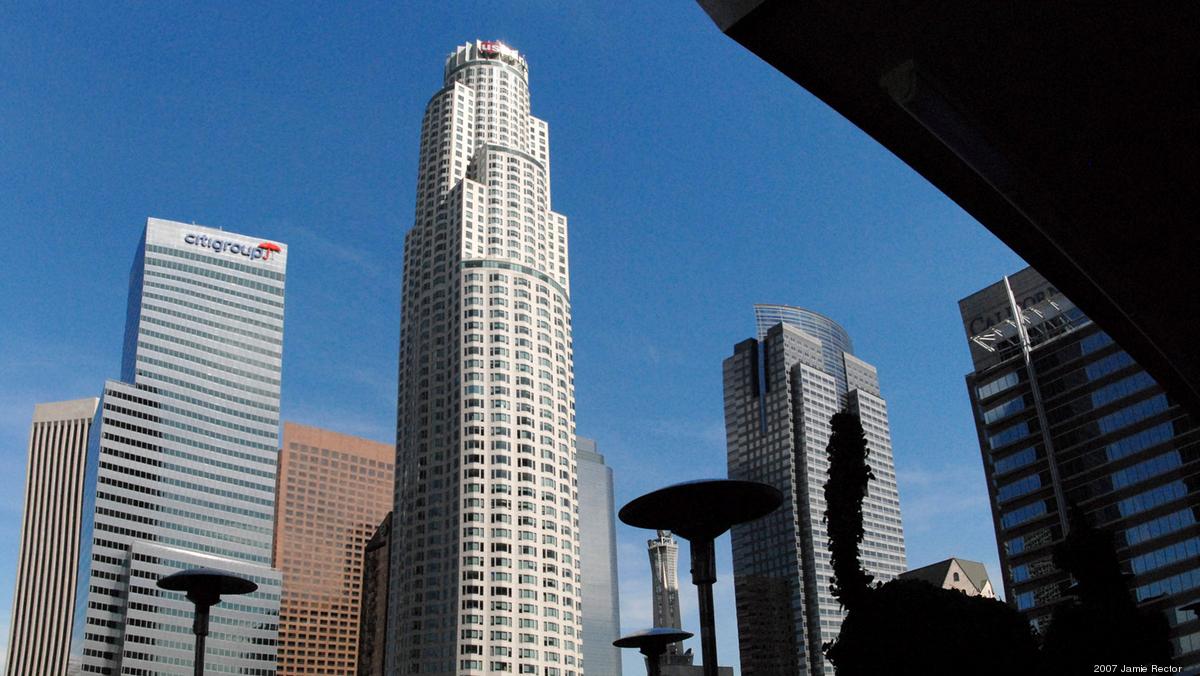
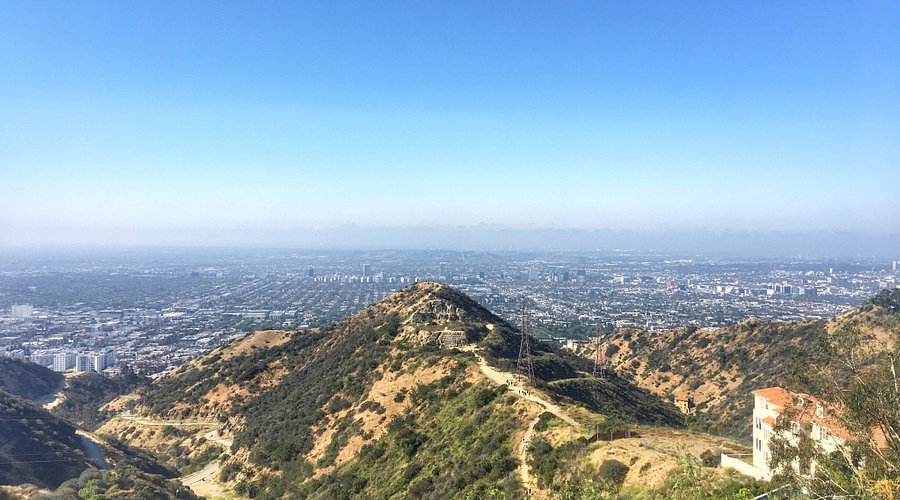
The summit of Runyon Canyon delivers what hikers came for: a 360-degree panorama that captures Los Angeles in all its sprawling, contradictory glory. To the south, the grid of Hollywood spreads out toward downtown’s cluster of high-rises. On clear days—increasingly rare but still possible—the Pacific Ocean appears as a hazy blue line beyond the Westside. The San Gabriel Mountains create a dramatic backdrop to the north and east.
But the real draw is the proximity to the Hollywood Sign, that monument to ambition and manufactured dreams. From the park’s northern vista point, the sign sits close enough to read the imperfections in the letters, close enough to understand it as a physical object rather than just a symbol. Tourists aim their cameras. Locals barely glance at it. Everyone acknowledges its presence.
The view functions differently depending on when you arrive. Morning hikers catch the city waking up, the light soft and forgiving, traffic still manageable on the freeways below. Sunset draws the photographers and romantics, the people who want to watch the city transform into a grid of lights as the sky cycles through its nightly color show. The park officially closes at sunset, but enforcement is gentle, and plenty of hikers time their descent to coincide with the deepening dusk.
The Dogs: Off-Leash Democracy in Action
Runyon Canyon’s most distinctive feature might be its off-leash policy, a rarity in urban Los Angeles. The park designated specific areas where dogs can run free, and the result is a canine social experiment that somehow works. On any given day, dozens—sometimes hundreds—of dogs navigate the trails, their humans trailing behind or occasionally just sitting and letting their pets handle the exercise independently.
The dog culture here reflects Los Angeles itself: stratified but integrated. There are the professional dog walkers, identifiable by the fact they’re managing six or eight dogs simultaneously, all perfectly behaved, all off-leash, all somehow responding to whistled commands. These are the working professionals, running legitimate businesses built on the foundation of this park’s policies.
Then there are the personal dogs, ranging from pandemic-adopted rescue mutts to purebred designer breeds that cost more than used cars. A Hollywood producer’s labradoodle might wrestle with a rescue pittie mix. A screenwriter’s anxious terrier might follow a confident German Shepherd up a hill. The park’s social leveling extends to the animals.
The off-leash policy requires a certain faith in collective responsibility. It works because most regular users understand the unwritten rules: pick up after your dog, keep aggressive animals on leash, don’t let your pet harass other hikers. The system isn’t perfect—conflicts occur, mistakes happen—but it functions far better than skeptics would predict.
For many Angelenos, particularly those in small apartments, Runyon Canyon serves as a backyard substitute. It’s where dogs get their exercise, their socialization, their chance to be animals in a city that often demands domestication above all else.
The People: Who Climbs and Why
The park’s human population shifts throughout the day like tide patterns. Early morning belongs to serious exercisers: people who treat the canyon as a gym, who time their ascents, who barely pause at the summit before descending. These are the disciplined fitness devotees, often solitary, headphones in, focused on heart rates and personal records.
Mid-morning brings the entertainment industry’s flexible schedule crowd—writers, actors between projects, producers in development hell, the creative class that can choose when to work. This is when the networking happens, when “taking a meeting” might mean hiking together while discussing scripts or pitches. The combination of physical activity and professional discussion provides perfect cover for both parties; if the meeting doesn’t yield results, at least you got a workout.
Late morning through afternoon attracts tourists, identifiable by their inappropriate footwear and surprise at the trail’s difficulty. Tour companies include Runyon Canyon on their “Real Hollywood” packages, and rental car GPS systems direct visitors here as a must-see attraction. The locals grumble about the crowds, but the tourists bring an energy of genuine discovery, experiencing the view as revelation rather than routine.
Weekends transform the demographic entirely. Families appear with children who treat the trails like adventure courses. Groups of friends make it a social outing. The pace slows. The atmosphere becomes less about individual achievement and more about collective experience.
The Culture: Instagram, Celebrities, and Community
Runyon Canyon exists at the intersection of authentic outdoor recreation and Los Angeles performance culture. It’s both a legitimate hiking experience and a stage for self-presentation. This duality creates interesting tensions.
The park has become an Instagram location tag unto itself, a backdrop for fitness influencers, lifestyle bloggers, and anyone building a personal brand around wellness and outdoor adventure. The predictability of these posts—athletic wear, strategic mid-hike poses, sunrise or sunset lighting—has become its own genre. Critics mock the artificiality, but the impulse is understandable: people want to document experiences, want to share evidence of their active lifestyles, want to participate in the visual culture of contemporary Los Angeles.
The rise of social media has transformed how people interact with the park. What was once simply a hike has become content. The golden hour attracts photographers who understand light and angles. Fitness models arrive in coordinated outfits. Yoga instructors conduct impromptu classes at the summit, their sessions documented and shared. Some purists lament this transformation, yearning for a pre-Instagram era when hiking was just hiking. But the canyon has always been performative—the difference is simply that the performance now has a digital audience.
Celebrity sightings are common enough to be unremarkable. Actors, musicians, and industry figures hike here regularly, banking on the social contract that prevails in the canyon: mutual recognition without intrusion. Asking for photos is considered gauche. A nod of acknowledgment is acceptable. Pretending not to notice is perfectly fine.
The unwritten rules extend beyond celebrity encounters. There’s an etiquette to the trails: faster hikers get the right of way on narrow sections, downhill hikers yield to those climbing, headphone wearers remain aware of their surroundings. These norms emerge from repeated interaction and collective experience. They’re not posted anywhere, but regular users know them instinctively.
Beneath the surface performance culture, genuine community exists. Regular hikers recognize each other, even if they never exchange names. Dogs become social connectors—people who might never speak otherwise bond over their animals. Trail conditions get discussed. Recent wildlife sightings get reported. When someone falls or needs help, strangers respond immediately.
The park has also become a space for memorial hikes and celebrations. Groups gather to honor deceased friends, scattering ashes at favorite viewpoints. Sunrise hikes mark birthdays or personal milestones. The canyon absorbs these individual stories into its larger narrative.
Some of the most consistent communities form around specific times and routines. The 6 AM crew knows each other by face if not always by name. The weekend afternoon crowd operates differently, more casual and social. Evening hikers share a certain adventurousness, pushing the boundaries of official closing times to catch the city lights emerging below.
There are also the volunteers, the people who organize unofficial trail maintenance days, who bring trash bags to collect litter, who report damaged signs or dangerous conditions to park authorities. These stewards receive no recognition beyond the satisfaction of maintaining the space they love. Their work is essential and largely invisible, the kind of civic engagement that keeps public spaces functional.
The Physical Challenge: Why Difficulty Matters
The appeal of Runyon Canyon isn’t despite its difficulty but because of it. In a city where driving is default and walking is often seen as a sign of economic hardship, choosing to climb a steep trail represents a deliberate rejection of convenience culture. The sweat matters. The elevated heart rate matters. The burning in the quads on the steeper sections matters.
Los Angeles offers plenty of flat, easy walking paths. People choose Runyon Canyon specifically because it demands effort. The vertical gain—nearly 900 feet at certain points—is significant enough to qualify as a workout but accessible enough that most reasonably fit people can complete it. This sweet spot of difficulty makes the park democratic in a way that more extreme trails aren’t.
The physical challenge serves multiple purposes. For some, it’s training for bigger adventures—the San Gabriel Mountains loom to the north, promising more serious hiking. For others, the canyon is the adventure itself, a chance to test limits without requiring extensive preparation or equipment. You can hike Runyon in running shoes. You can complete the loop in an hour. You can fit it into a lunch break or before work.
The democratization of difficulty also means the park sees a wider range of fitness levels than most gyms. Elderly hikers move slowly but steadily, proving that age doesn’t preclude participation. Parents carry children in backpacks, introducing the next generation to trail culture. People recovering from injuries use the trails for rehabilitation, gradually rebuilding strength and confidence.
Pain and discomfort become shared experiences. Everyone struggles on the steeper sections. Everyone feels their heart pounding. The woman in designer athletic wear breathes just as hard as the guy in a faded t-shirt. The physical reality of the climb strips away some of the artifice that dominates other Los Angeles spaces.
The Ecology: Nature in an Urban Context
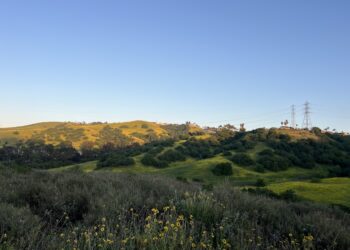
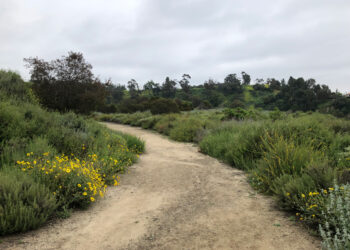
Runyon Canyon is wild but not wilderness. It’s urban nature, shaped by both natural forces and human impact. The vegetation is typical Southern California chaparral: drought-resistant shrubs, wild sage, California buckwheat, and the occasional oak tree clinging to the hillside. In spring, after adequate rain, wildflowers emerge—California poppies, lupine, wild mustard—transforming the dusty landscape into temporary color.
Wildlife persists despite the human traffic. Coyotes are regular residents, most active at dawn and dusk. Hikers occasionally spot them trotting across the trail or watching from hillside perches. Their presence creates necessary wariness about off-leash small dogs. Hawks circle overhead. Lizards skitter across sun-warmed rocks. Rattlesnakes occupy the canyon too, though encounters are relatively rare given the trail traffic; most snakes sensibly avoid the human parade.
The ecosystem here demonstrates nature’s resilience and adaptation. This isn’t pristine wilderness—it’s been grazed, developed, abandoned, and repurposed—but life continues. Plants grow. Animals hunt. The cycles persist despite being enclosed by one of America’s largest urban areas.
Environmental challenges are constant. Drought stresses the vegetation. Fire risk remains ever-present during dry months. Erosion from thousands of footsteps requires ongoing trail maintenance. Litter is a perpetual problem despite regular cleanup efforts. The park’s accessibility creates impact, and managing that impact requires sustained attention.
The Controversy: Access, Equity, and Urban Recreation
Runyon Canyon’s popularity has generated criticism. Some argue that its overcrowding diminishes the quality of the outdoor experience. Others point out that its location in an affluent area makes it primarily accessible to those who can afford to live nearby or own cars. Public transportation to the park exists but remains inconvenient, effectively limiting access for many Angelenos.
The off-leash dog policy, while beloved by many, has created conflicts. Not everyone appreciates unleashed dogs approaching them on trails. Some hikers have legitimate fears or allergies. Parents with young children sometimes find the canine chaos overwhelming. The park attempts to balance these competing interests through designated on-leash areas, but enforcement is minimal and conflicts persist.
There are also ongoing debates about development and management. Should the park install more amenities—bathrooms, water fountains, shaded rest areas? Or would such improvements fundamentally alter the character that makes the park special? The tension between making the space more accessible and maintaining its rugged nature remains unresolved.
Parking is a constant source of neighborhood friction. On busy weekends, hikers park throughout the surrounding residential streets, frustrating homeowners. The city has implemented parking restrictions in response, but this further limits access for those without alternatives.
The Future: Preservation in a Growing City
As Los Angeles continues to grow and densify, spaces like Runyon Canyon become increasingly valuable. The park represents what urban planners call “green infrastructure”—natural areas that provide ecological, recreational, and psychological benefits to city dwellers. Its value isn’t just aesthetic; it’s functional, serving as a pressure valve for a high-density population.
Climate change poses challenges. More intense heat waves could make summer hiking dangerous. Increased wildfire risk might force temporary closures. Water scarcity affects the vegetation that stabilizes the hillside. The park’s management will need to adapt to these evolving conditions.
There’s also the question of how to balance preservation with access. Should the city limit the number of daily visitors to reduce impact? Should parking be formalized and potentially monetized? Should certain trails be designated as dog-free to accommodate diverse user groups? These questions don’t have easy answers, but they’re becoming increasingly urgent.
Why It Matters: Urban Nature as Essential Infrastructure
Runyon Canyon matters because it represents something larger than recreation. It’s a statement about what cities should provide: access to nature, space for community, places where the social hierarchies that dominate urban life temporarily dissolve. On these trails, professional success and personal wealth matter less than whether you can make it to the top, whether your dog plays well with others, whether you’re willing to share the view.
The park also demonstrates that urban wilderness doesn’t need to be pristine to be valuable. It can be dusty, crowded, complicated, and imperfect. It can serve multiple functions simultaneously—fitness space, dog park, tourist attraction, mental health resource, community center. Its value lies precisely in this multiplicity, in its ability to be different things to different people.
For a city often criticized for its lack of public space and walkability, Runyon Canyon offers a counter-narrative. It proves that Angelenos will embrace outdoor recreation when it’s accessible, that community can form around shared experience, that nature and urbanity don’t have to exist in opposition.
The dusty trails will continue to fill each morning. Dogs will run. Dreamers will climb toward views that inspire both ambition and humility. The Hollywood Sign will watch over it all, that monument to aspiration perched above a park that represents something more grounded: the daily work of living in a challenging city, the small victories of making it to the top, the simple pleasure of moving through landscape under your own power.
Runyon Canyon isn’t perfect, but it’s real. It’s Los Angeles distilled to its essential elements: beauty and struggle, community and individuality, nature and performance. It’s an urban oasis not because it offers escape from the city, but because it offers a different way to experience being in it—one sweaty step at a time, surrounded by fellow travelers, all reaching for something just slightly beyond immediate grasp.