

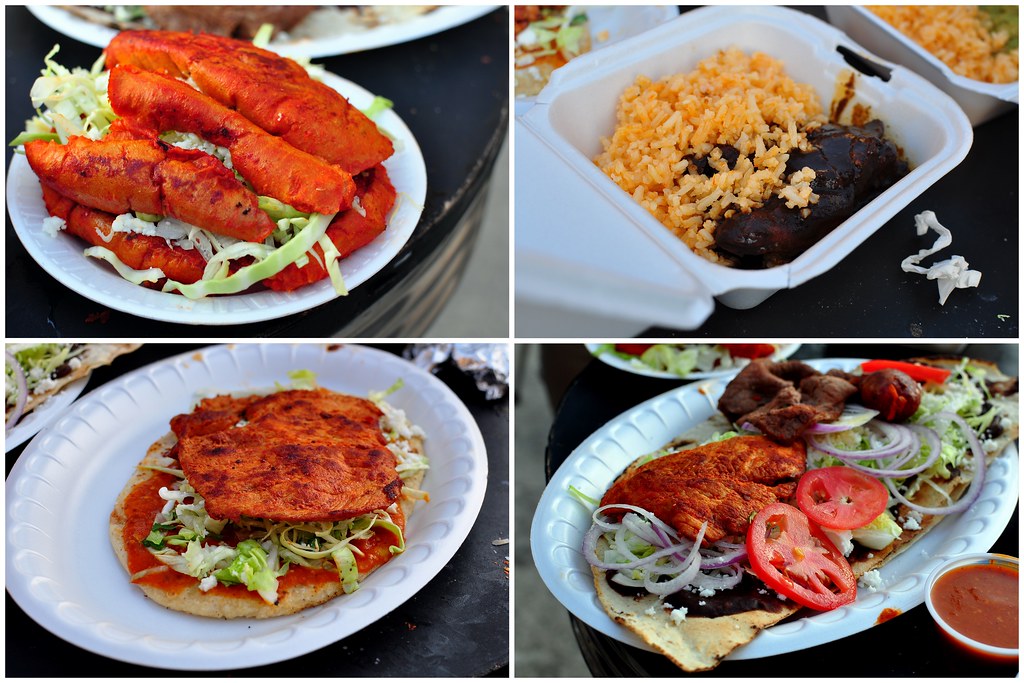
The morning sun hasn’t quite burned through the marine layer when vendors start arriving at the Rose Bowl parking lot, their trucks and trailers forming a temporary city of steam, smoke, and sizzling promise. This is the Los Angeles Street Food Fest, an annual celebration that transforms ordinary pavement into one of the most democratic dining experiences in America. Here, beneath the San Gabriel Mountains, the city’s sprawling culinary identity comes into sharp focus—one paper plate at a time.
The Evolution of LA’s Street Food Scene
Los Angeles didn’t invent street food, but it has certainly perfected the art of making it a cultural phenomenon. The city’s street food tradition stretches back over a century, from the tamale vendors who worked downtown corners in the 1900s to the loncheras that served construction workers and day laborers throughout the postwar boom. What makes the modern Street Food Fest different is its self-awareness, its celebration of what was once relegated to the margins of acceptable dining.
The festival began as a modest gathering in 2009, born from the food truck revolution that saw chefs leave brick-and-mortar establishments to serve adventurous cuisine from mobile kitchens. That first year drew perhaps three thousand curious eaters. Today, the event regularly attracts upward of thirty thousand people over a weekend, transforming into a pilgrimage site for anyone who believes that great food doesn’t require white tablecloths or reservations made three months in advance.
A Geography of Flavor
Walking through the festival means traversing Los Angeles itself, compressed into a few acres. The city’s ethnic neighborhoods—Koreatown, Thai Town, Little Armenia, Historic Filipinotown, the sprawling Mexican and Central American communities of East LA and South Central—all send representatives. The result is a edible map that tells the story of migration, adaptation, and fusion that defines contemporary Los Angeles.
Near the entrance, a vendor from Boyle Heights serves birria tacos that have become the signature dish of LA’s current food moment. The consommé, rich with dried chiles and beef fat, gets ladled over tortillas that hit the flat-top with a satisfying hiss. The cheese melts into lacy, crispy edges. People queue for forty-five minutes, and nobody complains. They’re too busy watching the assembly process, filming it, anticipating that first bite that manages to be both comforting and revelatory.
Three stalls down, a Korean vendor offers an entirely different vision: bulgogi beef nestled in a steamed bun, topped with kimchi and a sriracha mayo that acknowledges both Korean and Southeast Asian influences. This is fusion food, but not the cynical kind designed by marketing committees. It’s the organic fusion that happens when the daughter of Korean immigrants grows up in a predominantly Latino neighborhood, dates someone whose family came from Vietnam, and decides to open a food business that reflects her actual life rather than some imagined authentic tradition.
The Democratization of Dining
The festival’s structure embodies a particular kind of California egalitarianism. There are no VIP sections, no special access for those willing to pay premium prices. A film producer waits in the same line as a mechanic from Van Nuys. A tech worker from Venice stands behind a teacher from Inglewood. The only currency that matters is patience and an appetite for discovery.
This democratization extends to the vendors themselves. Next to established restaurants with multiple locations, you’ll find someone who works a day job but dreams of opening their own place, testing recipes on weekend crowds. The festival serves as an incubator, a place where a grandmother’s recipe for Guatemalan pepián might find enough of an audience to justify a permanent food stall at Grand Central Market.
The economic model is straightforward: vendors pay for their space, keep their profits, and build their customer base. For many, the festival represents one of the few opportunities to enter the food business without the crushing overhead of rent, utilities, and permanent staff. A successful weekend here can generate enough income and publicity to sustain a fledgling business for months.
The Theater of Preparation
What separates street food from restaurant dining isn’t just the setting or the price point—it’s the visibility of the process. At the Street Food Fest, diners watch everything happen. They see the masa pressed for fresh tortillas, the way a practiced hand flips pad thai noodles in a screaming-hot wok, the careful construction of a Armenian beef lula kebab wrapped in lavash with herbs and pickled vegetables.
This transparency creates a different relationship between cook and customer. There’s an implicit trust, a recognition that the person making your food is putting their reputation on the line with every plate. When something exceptional emerges from that truck window, people return to say so. When someone tries a new combination that doesn’t quite work, the feedback is immediate and honest.
The best vendors understand they’re not just selling food—they’re providing entertainment. A man making dosas on a massive griddle works with the precision of a surgeon and the showmanship of a street magician. He pours the fermented rice batter in an expanding spiral, spreads it impossibly thin with the back of a ladle, adds potatoes and onions and cilantro-mint chutney, then folds the whole thing with a flourish that suggests both skill and joy in that skill.
The Flavor of Adaptation
Los Angeles street food tells a story of adaptation that goes beyond simple fusion. It reflects the reality of immigrants who arrived with culinary traditions but without access to all the ingredients those traditions required. Substitutions became innovations. New combinations emerged not from culinary school training but from necessity and creative problem-solving.
A Oaxacan vendor serves tlayudas—massive crispy tortillas topped with beans, meat, and vegetables—but she’s adapted the recipe to incorporate ingredients more readily available in LA. The quesillo cheese comes from a dairy in Ontario, California, not Oaxaca. The chapulines (grasshoppers) that would traditionally top the dish have been replaced with crispy shallots because most customers aren’t ready to eat insects, no matter how traditional. Yet something essential remains, a through-line connecting this parking lot to a town square in southern Mexico.
This pragmatic creativity appears everywhere. Filipino vendors serve lumpia, the spring rolls that reflect the Philippines’ own complex colonial history, but fill them with ingredients that speak to their customers’ evolving tastes: one vendor offers a bacon-cheeseburger lumpia that sounds like an abomination until you taste it and realize it’s actually brilliant. The wrapper provides textural contrast, the filling delivers the umami-rich satisfaction of American comfort food, and the banana ketchup dipping sauce ties it all back to Manila.
The Role of Nostalgia and Innovation
The festival exists in productive tension between preserving tradition and pushing forward. Some vendors stake their reputation on authenticity, on recipes unchanged for generations. Others treat traditional dishes as starting points for experimentation. Both approaches find their audiences.
An elderly Thai woman makes som tam the way she learned in Isaan seventy years ago—fierce with chiles, funky with fish sauce, bright with lime juice, and textured with crispy dried shrimp and long beans. People who grew up eating this dish seek her out specifically because she hasn’t adapted to American palates. The heat level remains aggressive, the fish sauce prominent. This is comfort food for a specific diaspora community, and they line up for the taste of home.
Meanwhile, a young Chinese-American chef serves “confusion buns”—a riff on gua bao that might include Korean fried chicken one weekend, Nashville hot catfish the next, or Jamaican jerk pork the weekend after that. He’s not interested in authenticity; he’s interested in deliciousness. His food reflects the reality of growing up in San Gabriel Valley, surrounded by every Asian cuisine imaginable, while also being fully American, fully exposed to the rest of the world’s flavors.
Neither approach is more valid than the other. The festival makes room for both, understanding that food culture is not static, that it never has been, even when people imagine some pure traditional past.
Community and Conversation
Between the food stalls, temporary seating areas fill with strangers who become temporary communities. A group of friends from different backgrounds orders different dishes, then passes them around, everyone tasting everything. This is how food culture actually spreads—not through glossy magazine articles or TV shows, but through direct experience, through someone saying “here, try this” and creating a convert.
The conversations happen in multiple languages, often within the same group. Spanish slides into English slides into Tagalog slides into Korean. People compare notes on which vendors are worth the wait, trade recommendations, debate the finer points of whether al pastor is better from a spit or a griddle (it’s the spit, obviously, but reasonable people can disagree).
These interactions represent something increasingly rare in contemporary Los Angeles, a city often critiqued for its fragmentation, its car culture that keeps people isolated in their own neighborhoods. The Street Food Fest creates accidental integration, drawing people from Palmdale and Riverside, from Malibu and Long Beach, from every corner of the sprawling metropolis.
The Economics of Affordability
In a city where a decent restaurant meal easily tops fifty dollars per person before drinks, the Street Food Fest offers something increasingly precious: affordability. Most dishes range from five to twelve dollars. A family of four can eat well for forty bucks. This matters in a city where income inequality has reached staggering proportions, where service workers often can’t afford to eat at the restaurants where they work.
The festival doesn’t pretend this food is cheap because it’s inferior. It’s affordable because the overhead is lower, because vendors aren’t paying Century City rent or employing a full front-of-house staff. The quality often exceeds what you’d find at restaurants charging three times as much. A plate of Salvadoran pupusas—thick corn tortillas filled with cheese and loroco flowers, served with curtido and salsa—costs six dollars and provides more satisfaction than many twenty-dollar entrees in trendy neighborhoods.
This economic accessibility ties into the festival’s deeper democracy. Food this good shouldn’t be available only to people who can afford thirty-dollar appetizers. The Street Food Fest insists that everyone deserves access to delicious, creative, culturally significant food.
The Future of Street Food Culture
As the festival enters its second decade, questions about its future naturally arise. Will success change its character? Will corporate sponsors and craft beer partnerships dilute what makes it special? Can it scale without losing the sense of discovery and authenticity that drew people in the first place?
The organizers face these challenges consciously. They’ve resisted the temptation to expand too rapidly, to franchise the concept, to turn it into something slick and commercial. The festival remains somewhat rough around the edges—long lines, limited seating, occasional logistical chaos. But these rough edges are part of its charm, part of what makes it feel genuine rather than manufactured.
New vendors continue to apply each year, bringing cuisines that weren’t represented before. Recent festivals have featured Uyghur food, Ethiopian kitfo, Venezuelan arepas, and Cambodian num pang. The city’s newest immigrant communities find their place alongside more established groups, continuing the cycle of adaptation and innovation that has always defined Los Angeles.
Conclusion: More Than Just Lunch
The Los Angeles Street Food Fest succeeds because it understands something fundamental: food is never just about sustenance. It’s about identity, memory, community, and creativity. It’s about the way flavors can transport you across time and distance, the way a perfect bite can capture something essential about a place and a people.
The festival transforms a parking lot into a temporary utopia where difference is celebrated rather than merely tolerated, where unfamiliarity invites curiosity instead of suspicion. For a few hours on a weekend, Los Angeles becomes the city it imagines itself to be—diverse, creative, accessible, and unified by the simple human pleasure of eating good food together.
When the festival ends and vendors pack up their trucks, when the parking lot returns to its ordinary function, something lingers. People leave with full stomachs and new favorites, with plans to seek out that Oaxacan vendor at her permanent stall or to try making birria at home. They leave having experienced, however briefly, a version of Los Angeles that exists mostly in fragments but comes together, at least for a weekend, into something whole.