

Los Angeles might be famous for its traffic, tacos, and film industry, but the city harbors a secret that locals guard jealously: some of the most spectacular paddling destinations on the West Coast. From glassy harbor waters perfect for beginners to open ocean adventures that’ll test even seasoned paddlers, LA offers a surprising variety of waterways just waiting to be explored by kayak or paddleboard.
Whether you’re looking to spot harbor seals, glide through kelp forests, or simply escape the concrete jungle for a few hours, this guide covers everything you need to know about getting on the water in the City of Angels.
The Appeal of Paddling in Los Angeles
There’s something almost rebellious about paddling in LA. While millions of people sit in traffic on the 405, you could be floating past pelicans in Marina del Rey or watching dolphins breach off the Palos Verdes coastline. The contrast between the urban sprawl and these pockets of natural beauty makes every paddle feel like a small escape.
The climate here cooperates beautifully with water sports. With over 300 days of sunshine annually and water temperatures that rarely dip below the mid-50s (and climb into the comfortable 70s during summer), you can paddle year-round without needing a drysuit. Morning glass—that perfectly calm water surface before the wind picks up—is a regular occurrence, especially during the warmer months.
LA’s paddling scene has exploded in recent years, and for good reason. The learning curve for stand-up paddleboarding is gentle enough that most people can stay upright within their first session. Kayaking offers similar accessibility, with stable recreational kayaks available for rent at virtually every launch point. This isn’t an elitist sport here; it’s become as quintessentially LA as hiking Runyon Canyon or grabbing acai bowls in Venice.
Marina del Rey: The Gateway for Beginners
If you’ve never paddled before, Marina del Rey should be your first stop. As the largest man-made small craft harbor in North America, it offers miles of protected waterways with minimal current and virtually no waves. The harbor’s breakwater shields paddlers from ocean swells, creating conditions so calm that even the most nervous first-timer can relax.
Mother’s Beach and Basin D
The area around Mother’s Beach serves as ground zero for LA’s paddling community. Several rental outfits operate here, offering everything from basic kayaks to premium paddleboards by the hour. The basin itself is sheltered and shallow near the shore, making it ideal for families with children or anyone just getting their sea legs.
From here, you can paddle out into the main channel and explore the harbor’s various basins. Each finger of the marina has its own character—some lined with massive yachts, others with sailboats that bob gently in their slips. Keep your eyes open for the resident sea lions that haul out on dock platforms and buoys throughout the harbor. They’re generally unbothered by paddlers, though you’ll want to give them space (and your nose will thank you for it).
Burton Chace Park Launch
For a slightly different experience, launch from Burton Chace Park on the harbor’s south side. This spot puts you closer to the harbor mouth, where you can watch boats coming and going and feel the first hints of ocean energy as you approach the breakwater. On calm days, experienced paddlers sometimes venture outside the breakwater for open water paddling, but the conditions can change quickly—this isn’t recommended unless you know what you’re doing.
The park also hosts regular paddleboard yoga classes, which have become something of a phenomenon. There’s nothing quite like holding a warrior pose while floating on water, with the marina’s masts swaying in your peripheral vision.
Venice Canals: A Hidden Gem
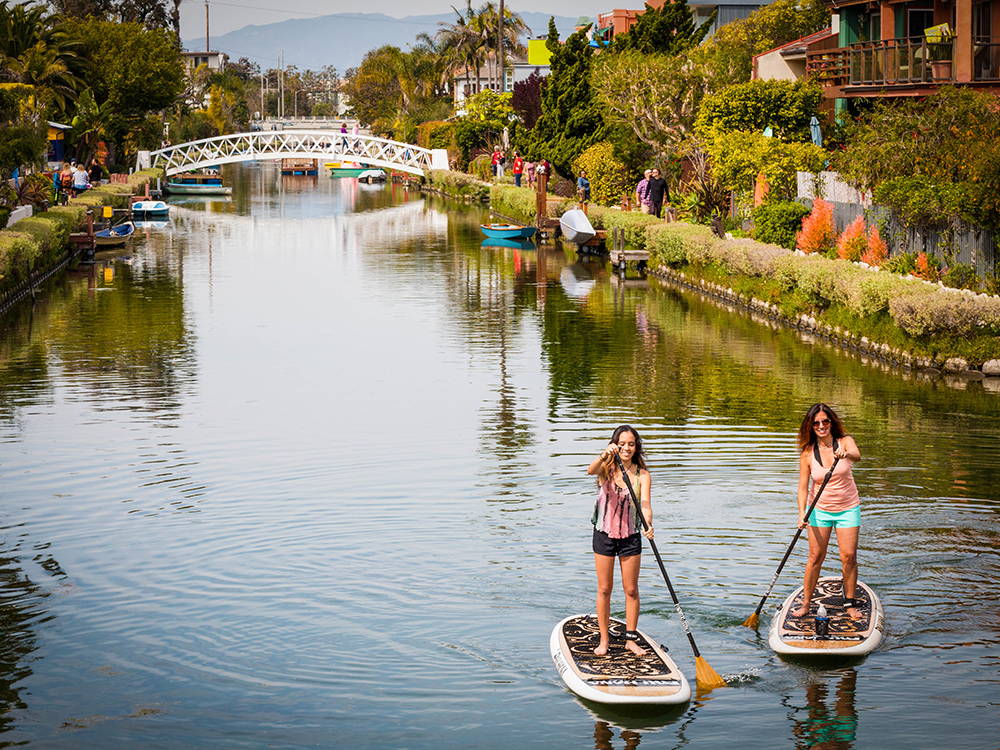
Most tourists never discover the Venice Canals, and many Angelenos don’t realize you can actually paddle through them. This network of waterways, originally built in 1905 as part of developer Abbot Kinney’s vision to recreate Venice, Italy, offers one of the most unique paddling experiences in Southern California.
Navigating the Waterways
The canals are narrow—some sections barely wide enough for two kayaks to pass—but that intimacy is part of the charm. You’ll glide past eclectic homes ranging from charming cottages to ultra-modern architectural statements, their gardens spilling down to the water’s edge. Ducks, herons, and the occasional egret populate the canals, seemingly indifferent to the million-dollar real estate surrounding them.
Access can be tricky since there’s no official public launch point. Many paddlers carry inflatable boards or lightweight kayaks to the water’s edge along Dell Avenue. The best approach is to be respectful, keep noise to a minimum, and paddle during reasonable daylight hours. Residents are generally welcoming to paddlers who treat the area with care.
The canals connect to a small basin near Washington Boulevard that eventually leads to the ocean channel, though navigating all the way to open water requires passing through some industrial areas. Most paddlers prefer to simply meander through the residential sections, soaking in the bizarre beauty of this anachronistic neighborhood.
Long Beach and Naples Island: Old-World Charm on the Water
South of LA proper, Long Beach offers paddling opportunities that feel worlds away from the rest of the metropolitan area. Naples Island, in particular, transports you to somewhere decidedly un-LA, with its winding canals, Italian-inspired architecture, and gondolas that still ply the waterways.
The Naples Canal System
The canals here are wider and deeper than those in Venice, allowing for more relaxed paddling without worrying about running aground. Several rental shops operate near the intersection of Pacific Coast Highway and 2nd Street, making it easy to get outfitted and on the water.
A complete loop around Naples and the neighboring Rivo Alto Canal takes about an hour at a leisurely pace. You’ll pass under charming footbridges, past Colonnade Park, and along waterfront patios where locals sip wine and wave at passing paddlers. The architecture varies wildly—Spanish Colonial next to Cape Cod next to Contemporary—creating a visual feast that keeps every stroke interesting.
Alamitos Bay and Colorado Lagoon
Beyond the canals, Alamitos Bay opens up into a larger body of water perfect for longer paddles. The bay connects to the ocean but remains relatively protected, with a sandy beach on one end and the Belmont Shore neighborhood lining its shores. This is where you’ll see more serious paddlers training, often in racing-style prone paddleboards or outrigger canoes.
Colorado Lagoon, recently restored after decades of environmental degradation, offers a quiet alternative for wildlife enthusiasts. This small coastal wetland attracts shorebirds, and the water quality improvements have brought back fish and other marine life. It’s a peaceful spot for a short paddle, especially during weekday mornings when you might have the lagoon almost entirely to yourself.
Malibu: Where Paddling Meets Paradise
Driving up Pacific Coast Highway to paddle in Malibu feels almost decadent, but the coastline here justifies every minute of the journey. The combination of dramatic mountains plunging into the sea, relatively clean water, and abundant marine life makes Malibu a paddler’s paradise.
Malibu Lagoon and Surfrider Beach
The lagoon at Malibu Lagoon State Beach provides flat-water paddling in sight of the famous Surfrider break. Watching surfers catch waves while you float in the calm lagoon offers an interesting perspective on the different ways people interact with the ocean. The lagoon itself is a restored wetland, and you’ll often spot herons, egrets, and various shorebirds feeding along its edges.
Launching from the beach side gives you access to open water paddling, but be warned: Surfrider is one of California’s most crowded surf breaks, and mixing paddleboards with surfers rarely ends well. The unwritten rule is to stay well inside or outside the surf zone, never cutting through where surfers are riding.
Paradise Cove to Point Dume
For more adventurous paddlers, the stretch between Paradise Cove and Point Dume offers spectacular coastal scenery. You’ll paddle past sea caves, kelp forests, and rocky outcrops that harbor everything from sea stars to octopuses. Dolphins are frequent visitors to these waters, and it’s not uncommon to find yourself suddenly surrounded by a pod.
Point Dume itself is a prominent headland that juts into the Pacific, and paddling around it gives you views of the dramatic cliff faces and the secluded beaches below. The currents can be tricky here, especially around the point, so this paddle is best reserved for experienced ocean paddlers or guided tours.
Rentals in Malibu tend to be pricier than elsewhere in LA, but several outfitters operate out of the various beaches. Some offer guided tours that include wildlife interpretation and safety supervision, which can be well worth the investment for your first time paddling open water.
Palos Verdes Peninsula: The Wild Side of LA
The Palos Verdes Peninsula feels like it belongs somewhere else entirely—Northern California, maybe, or the Pacific Northwest. The rugged coastline, dramatic bluffs, and cold, clear water create conditions more suited to adventure paddling than casual recreation.
Abalone Cove and Portuguese Bend
Abalone Cove Shoreline Park provides one of the few beach access points along this stretch of coast. The cove itself offers relatively protected waters for launching, though the rocky bottom and occasional swell require more attention than harbor paddling. Once on the water, you can explore tide pools, kelp beds, and the geological oddities created by the ongoing landslide at Portuguese Bend.
The underwater kelp forests here are exceptional—some of the healthiest in Southern California. On calm days, you can peer down through your board and watch garibaldi (California’s state fish, with their brilliant orange coloring) dart through the amber fronds. Sea otters have been spotted here occasionally, though they’re still rare this far south.
Terranea and Sacred Cove
Near the southern tip of the peninsula, the area around Terranea Resort offers dramatic paddling scenery. Sacred Cove, a small beach accessible only by water or a scramble down the cliffs, makes for an excellent destination. The paddle there takes you past sea caves, blowholes, and rock formations that have been sculpted by millennia of wave action.
Conditions in this area can change rapidly. What starts as a calm morning can turn into a challenging afternoon with wind chop and building swell. Always check forecasts, tell someone your plans, and consider paddling with a partner. This isn’t the place for casual recreation—it’s genuine ocean paddling that demands respect.
Practical Considerations for LA Paddlers
Rental Options and Costs
Rental prices across LA generally range from $15-25 per hour for basic equipment, with full-day rentals available at most locations for $50-80. Premium equipment, tours, and lessons command higher prices. Most rental shops require a valid ID and credit card, and many won’t rent to minors without a parent present.
If you’re planning to paddle regularly, purchasing your own equipment makes financial sense fairly quickly. Inflatable paddleboards have revolutionized the sport for city dwellers, as they pack down small enough to fit in a closet and can be transported on public transit or in a small car. Quality inflatables from reputable brands run $500-1000 and rival rigid boards in performance.
Safety and Regulations
California law requires personal flotation devices (PFDs) on all watercraft, including kayaks and paddleboards. For adults, having an approved PFD on board (not necessarily worn) is sufficient, but children under 12 must wear their PFDs at all times. Most rental operations provide PFDs, but check before you launch.
Leashes are essential for paddleboarding, especially in ocean conditions. A quality coiled leash keeps your board attached to you if you fall, which can be life-saving in currents or rough water. Beyond safety, it’s simply good etiquette—a runaway board can injure other water users or beachgoers.
Marine protected areas dot the LA coastline, and while paddling through them is perfectly legal, you’ll want to be aware of any restrictions on anchoring or disturbing wildlife. The Channel Islands Marine Sanctuary begins not far offshore, and similar protections extend to various nearshore areas.
Best Times to Paddle
Morning consistently offers the best conditions throughout LA. Winds typically pick up by late morning and can create challenging chop by afternoon, especially during spring and summer. The calmest months are usually August through October, when the Pacific High pressure system keeps things settled.
Winter brings its own appeal despite cooler water temperatures. Storms punctuate the season, but the days between them often deliver stunning clarity and dramatic cloud formations. The crowds thin considerably, and you might find yourself alone on the water in spots that are packed during summer weekends.
Gray whales migrate past LA from December through April, and lucky paddlers occasionally witness these massive animals from surprisingly close range. Maintaining distance is both legally required and common sense—a surfacing whale can easily overturn a small craft—but simply being on the water during migration season adds anticipation to every paddle.
Redondo Beach and King Harbor: The South Bay Sweet Spot
Nestled between the busier beaches of Manhattan and Hermosa to the north and the industrial port areas to the south, Redondo Beach offers a paddling experience that balances accessibility with genuine ocean adventure. King Harbor serves as the launching point for most paddlers here, and its protected waters make it an excellent choice for intermediate paddlers looking to expand their skills.
Harbor Paddling and the Breakwater
The harbor itself provides calm conditions similar to Marina del Rey, with fuel docks, fishing boats, and pleasure craft creating a working waterfront atmosphere. Several rental operations line the harbor, and the Redondo Beach Pier—a sprawling complex of restaurants and shops—offers convenient parking and amenities.
The real draw here is what lies just beyond the breakwater. On calm days, paddlers can venture outside the harbor and explore the coastline heading north toward the other beach cities or south toward Palos Verdes. The water tends to be clearer than in the marinas, and the underwater topography creates interesting kelp patches and rocky reefs that attract diverse marine life.
The Veterans Park Launch
For a more direct ocean access point, Veterans Park at the north end of the beach provides parking and an easy sand launch. From here, you’re immediately in open water with no harbor navigation required. The beach break can make launching tricky on bigger days, so beginners should stick to small surf or head to the harbor instead.
This stretch of coastline is particularly good for wildlife encounters. Leopard sharks frequent the shallows during summer months—harmless to humans but thrilling to spot from your board. Bat rays cruise the sandy bottom, and during certain times of year, you might encounter schools of baitfish so dense they darken the water beneath you.
Ballona Creek and Wetlands: Urban Nature at Its Finest
One of LA’s most unexpected paddling destinations runs through the heart of the Westside. Ballona Creek, once a concrete flood control channel, has become increasingly popular with kayakers and paddleboarders seeking a different kind of urban adventure.
Tidal Considerations
Paddling Ballona Creek requires attention to tides. At high tide, the channel fills with enough water to navigate comfortably; at low tide, you’ll be dragging your board through mud. Most paddlers launch from the area near the Marina del Rey channel during the incoming tide, paddle upstream as far as conditions allow, then ride the ebbing tide back toward the ocean.
The scenery along the creek varies from industrial to surprisingly natural. Great blue herons perch on the banks, seemingly oblivious to the Culver City office buildings looming nearby. The Ballona Wetlands Ecological Reserve, one of the last remaining coastal wetlands in Los Angeles County, borders portions of the creek and is undergoing restoration that promises to improve both wildlife habitat and paddling opportunities in coming years.
What to Expect
This isn’t a paddle for those seeking pristine wilderness. Shopping carts occasionally dot the channel edges, and the water quality, while improved from years past, won’t win any awards. But there’s something compelling about paddling through the city rather than escaping it—seeing LA from water level, passing under bridges you’ve driven over countless times, and discovering pockets of nature that persist despite the surrounding urbanization.
The creek connects to Ballona Lagoon near the ocean, which offers calmer waters and better birdwatching opportunities. The lagoon is accessible from various points in Playa del Rey and provides a pleasant hour or two of exploration without requiring the commitment of a full creek paddle.
Building Skills: From Beginner to Ocean Paddler
The progression from novice to confident ocean paddler happens naturally in LA, given the variety of conditions available within a short drive. Most people start in the protected harbors, build confidence on calmer ocean days, and gradually take on more challenging paddles as their skills develop.
Lessons and Guided Tours
Investing in a lesson or two accelerates this progression dramatically. Professional instruction covers not just paddling technique but also water safety, weather reading, and the unwritten rules that govern interactions between different water users. Group lessons typically run $50-75 per person and last two to three hours; private lessons cost more but allow customized focus on your specific goals.
Guided tours offer another way to explore unfamiliar areas safely. A knowledgeable guide can show you sea caves you’d never find on your own, identify the wildlife you’re seeing, and ensure you don’t accidentally paddle into dangerous conditions. Tours to areas like the Palos Verdes Peninsula or the outer reaches of the Channel Islands (accessible by boat with paddleboard transport) open up experiences that would be risky to attempt independently.
The Local Paddling Community
LA’s paddling community has grown into a vibrant network of clubs, meetup groups, and informal gatherings. Facebook groups and apps like Meetup list regular paddles for various skill levels, from gentle morning cruises to challenging downwind runs. Joining these communities accelerates learning, expands your paddling partners, and often leads to friendships formed around shared water time.
Racing provides motivation for some paddlers, and several LA-area events cater to everyone from first-timers to elite competitors. The Marina del Rey area hosts multiple races throughout the year, as do Long Beach and various beach cities along the coast. Even if you have no interest in competing, spectating at these events reveals the impressive capabilities of the sport and might inspire you to push your own limits.
Equipment Evolution
As skills develop, many paddlers find their rental equipment no longer meets their needs. The progression typically moves from wide, stable all-around boards to longer, narrower touring or racing shapes that cover distance more efficiently. Kayakers might graduate from recreational sit-on-tops to sleeker sea kayaks that track better in open water.
LA’s climate and lifestyle have driven particular equipment trends. Inflatable paddleboards dominate among casual paddlers because they fit in apartment closets and small car trunks—practical considerations in a city where storage space is precious and parking is competitive. Folding kayaks serve a similar niche, collapsing to backpack size for transport on metro or bus.
The used market here is robust, with quality equipment regularly appearing on Craigslist, Facebook Marketplace, and at swap meets organized by local paddling clubs. Patient shoppers can often find well-maintained gear at significant discounts, and selling equipment when you’re ready to upgrade is equally straightforward.
Environmental Stewardship on the Water
Paddlers occupy a unique position in coastal conservation. We see things from perspectives unavailable to land-based visitors—the health of kelp forests, the presence or absence of marine life, the trash that accumulates in backwaters and along less-visited shorelines. This proximity creates both opportunity and responsibility.
Many paddling groups organize regular cleanup events, combining a paddle with trash collection along waterways and beaches. These events remove surprising amounts of debris from the marine environment while fostering community among participants. Even without organized events, carrying a small mesh bag and picking up floating trash during your regular paddles makes a cumulative difference.
The choices we make as paddlers also matter. Respecting wildlife by maintaining distance, avoiding sensitive nesting areas during breeding season, and never feeding marine animals preserves the wild character of these coastal ecosystems. Choosing reef-safe sunscreen protects the water quality we all depend on for our sport.
Finding Your Perfect Paddle
Los Angeles rewards the paddler who approaches it with curiosity. Each location offers something distinct: the urban marina experience at Marina del Rey, the quirky charm of Venice Canals, the old-world ambiance of Naples Island, the natural beauty of Malibu, the raw adventure of Palos Verdes. You could spend years exploring these waters and still find new routes, new wildlife encounters, new perspectives on this sprawling city.
The best advice for anyone new to LA paddling is simply to start. Pick a calm morning, rent a board or kayak from a reputable shop, and put some water under you. The learning curve is forgiving, the rewards are immediate, and before long you’ll be planning your next paddle before you’ve finished your current one.
There’s a particular satisfaction that comes from traveling under your own power, with nothing but a paddle connecting you to the water. In a city defined by cars and freeways, that self-propelled movement feels almost revolutionary. The harbor seals don’t care about your commute. The pelicans aren’t interested in your deadlines. Out on the water, you’re just another creature enjoying the Pacific, and LA—with all its chaos and beauty—looks completely different from sea level.