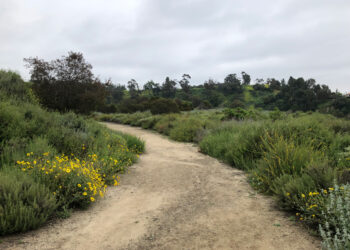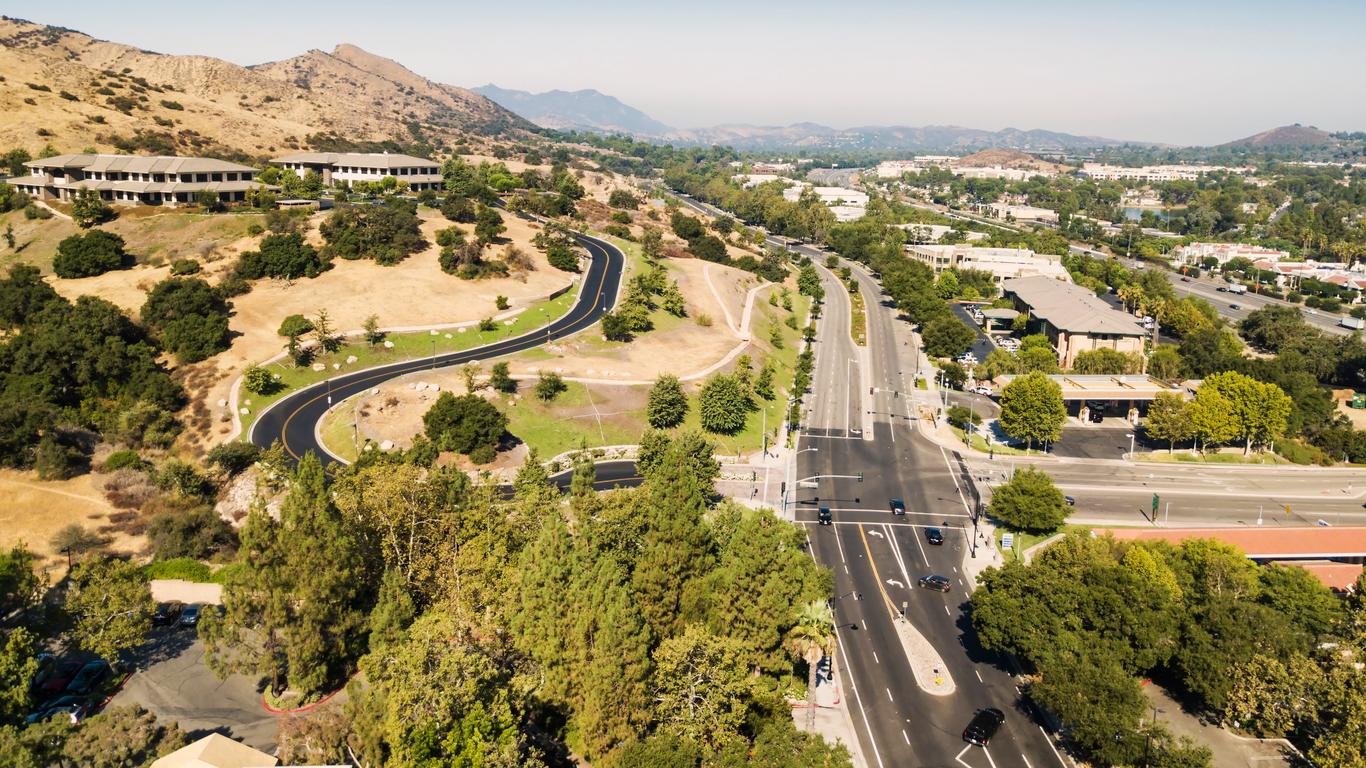


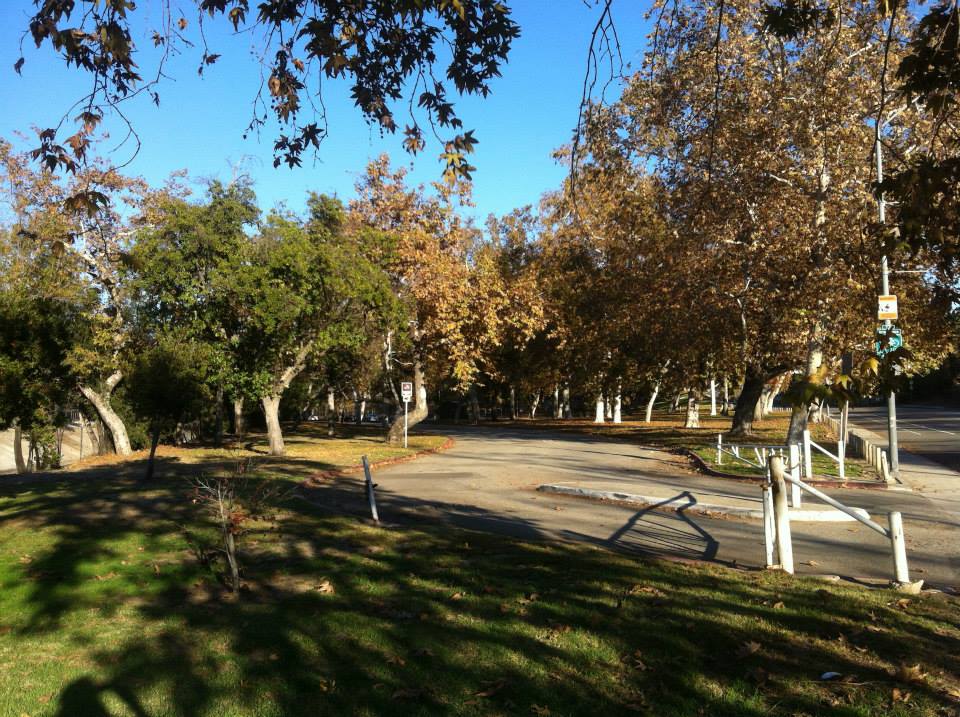
Los Angeles overflows with parks—from the celebrity-studded trails of Runyon Canyon to the sprawling expanses of Griffith Park. Yet tucked away in the northeast corner of the city, bordered by the concrete channel of the Arroyo Seco and the hum of the historic 110 Parkway, sits a green space that most Angelenos have never heard of. Hermon Park doesn’t make the tourist brochures or the Instagram influencer circuits, and that’s precisely what makes it worth discovering.
This unassuming park, also known as Arroyo Seco Park, carries within its borders a century of Los Angeles history—from Depression-era public works projects to the glittering excitement of the 1932 Olympics, from the grassroots organizing of neighborhood dog owners to the cultural legacy of Chicano music icon Lalo Guerrero. For the approximately 3,500 residents of the Hermon neighborhood and the surrounding communities of Highland Park and Montecito Heights, this is more than a park. It’s a community anchor that has witnessed the transformation of Northeast Los Angeles from isolated valley to vibrant urban enclave.
The Geography of Isolation
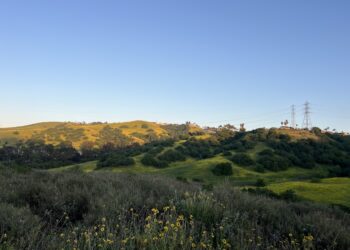
To understand Hermon Park, one must first understand Hermon itself. The neighborhood occupies a half-square-mile valley that, for much of its history, felt worlds apart from the rest of Los Angeles. The Arroyo Seco—Spanish for “dry creek”—runs along its western edge, while the Repetto Hills rise to the east and the city of South Pasadena borders to the north.
The Arroyo Seco is a seasonal waterway that begins its journey near Mount Wilson in the Angeles National Forest. By the time it reaches Hermon, it flows through a concrete channel, the result of flood control efforts that began in the 1930s. But the arroyo wasn’t always so predictable. In the early twentieth century, when the surrounding valleys were still ranchland, heavy rains would send torrents of water rushing down from the mountains, flooding the lowlands and making the crossing treacherous for days at a time.
This geographical isolation shaped Hermon’s character. While other Northeast Los Angeles communities like Highland Park and Eagle Rock developed robust commercial corridors and connections to the greater city, Hermon remained something of a pocket universe—a place where pick-up trucks still outnumber sports cars and the air carries the cedary scent of the towering deodar trees that line many residential streets.
From Religious Settlement to Los Angeles Neighborhood
The story of Hermon begins in 1903, when the Free Methodist church group approached a landowner named Ralph Rogers about purchasing a remote valley he had been unable to develop. Rogers had found success with real estate projects in Eagle Rock, Garvanza, and Highland Park, but this particular parcel—too isolated, too prone to flooding—had attracted no buyers.
The church group saw opportunity where Rogers saw liability. They established a school on the land and named their new community after the biblical Mount Hermon, a peak on the border of Lebanon and Syria mentioned in both the Old and New Testaments. The community organized itself around the school campus, and Rogers contributed one hundred building lots that the church could sell to fund operations.
For nearly a decade, Hermon existed as an independent community. That changed in 1912, when the neighborhood was annexed into the City of Los Angeles. The absorption into the larger city brought services and infrastructure, but the physical barriers remained. It wasn’t until 1926 that a bridge across the Arroyo Seco at Avenue 60 finally connected Hermon to Highland Park. The Monterey Road pass to the south opened in 1930, and the Hermon Avenue bridge to the west followed in 1939. (That bridge was later renamed Via Marisol by Los Angeles City Council member Art Snyder in 1978, a tribute to his young daughter Erin Marisol Snyder.)
The school that had anchored the community evolved as well. It became Los Angeles Pacific College in 1934, a proper four-year university. But the institution met an unfortunate end in 1965, when engineers determined that the buildings had sustained too much earthquake damage to bring up to code. Los Angeles Pacific College merged with Azusa College, eventually becoming today’s Azusa Pacific University. The campus itself continued as a private Christian high school before becoming home to Bethesda Christian University and Los Angeles College Prep Academy.
Birth of a Park: New Deal Roots and Olympic Dreams
Hermon Park was established in 1923 as part of the larger Arroyo Seco Park system. Originally known as Victory Park, the site underwent dramatic transformations during the 1930s and 1940s through a combination of federal work programs.
The Great Depression hit Los Angeles hard, but it also brought an infusion of public works funding that reshaped the city’s infrastructure. The Reconstruction Finance Corporation (RFC), established by President Herbert Hoover in 1932 to stimulate the economy, funded significant improvements at Hermon Park. According to the 1932-1933 Annual Report of the Board of the Los Angeles Park Commissioners, which referred to the site as “Arroyo Seco No. 1,” the RFC constructed an 1,800-foot roadway through the park.
But the real transformation involved the Arroyo Seco itself. Work crews widened and straightened the river channel, placing riprap—a protective layer of rocks—on both banks. The excavated dirt was used to fill in areas that would become lawns and building sites. The park commission’s report describes a comprehensive construction effort: service buildings including storage rooms, a garage, a workshop, and a watchman’s cottage; five new tennis courts with specially treated surfaces to reduce sun glare; an elaborate irrigation system covering about 84 acres with more than 40,000 feet of pipe; storm drains to divert seasonal flooding; and 1,200 linear feet of rock retaining walls to hold back the steep hillsides.
Those rock retaining walls served a special purpose. According to the Los Angeles Historic Resources Inventory, they functioned as terraced viewing areas for lawn bowling courts constructed for the 1932 Olympic Games. While lawn bowling wasn’t an official Olympic sport, the games held at Arroyo Seco Park coincided with the Olympics and attracted international competitors.
The Arroyo Seco Lawn Bowling Club became the most popular club in the region. By 1932, the federal government had funded the construction of world-class greens—completed just in time to host an unofficial world tournament alongside the Olympic festivities. A. E. Rudd, then-chairman of the American Lawn Bowling Association, declared the Arroyo Seco Park greens the finest in North America.
The park’s lawn bowling facilities achieved legendary status among enthusiasts. Thirty years after construction, Arroyo Seco remained the only location in the world with four bowling greens in one place. International visitors from New Zealand, Australia, Canada, and beyond reportedly expressed wishes to transport the rinks back to their home countries. In 1964, the site hosted the World Lawn Bowling Tourney, drawing competitors from as far away as South Africa, Australia, and the Fiji Islands.
The Works Progress Administration (WPA), another Depression-era federal program, likely contributed additional improvements in conjunction with the construction of the Arroyo Seco Flood Control Channel and the Arroyo Seco Parkway—the historic highway now known as the 110 Freeway and recognized as America’s first true freeway.
What Remains: Structures That Survived
Much of what visitors see at Hermon Park today carries echoes of those Depression-era construction efforts. At least two service buildings survive from the original RFC construction: a field house and a public restroom, both built in the utilitarian style characteristic of 1930s public works projects. The tennis courts at the park’s southern end also date to this period, though newer courts have been added over the years. Perhaps most evocative are the rock retaining walls and original walkways, their aged stones testifying to the labor of work crews employed nearly a century ago.
The historic lawn bowling clubhouse, constructed in 1939, still stands and has found new purpose. Since 1996, it has served as home to Art in the Park, a community cultural center operated through a partnership with the City of Los Angeles Department of Cultural Affairs.
Art in the Park: Cultural Programming Takes Root
Art in the Park emerged from a desire to address the specific needs of the Hermon community. In the mid-1990s, when the program began, the neighborhood struggled with low high school graduation rates. Berta Sosa, who founded the organization, envisioned a space where young people could explore creativity and begin to see themselves as capable of pursuing higher education.
What started as a youth-focused initiative has grown into a comprehensive cultural center offering classes and workshops in visual art, music, dance, readings, and film screenings. The programming deliberately taps into the traditions and cultures of the local community and greater Los Angeles, with particular emphasis on cultural education.
The center hosts two signature annual events that have become community traditions: a Corn Festival in spring and a Día de los Muertos celebration in fall. Classes for children and teens span the visual and urban arts, including hip hop dance—reflecting the evolving cultural landscape of Northeast Los Angeles.
Perhaps the most notable program housed within Art in the Park is the Lalo Guerrero School of Music. Founded in 1999, the program honors Eduardo “Lalo” Guerrero (1916-2005), widely known as the Father of Chicano Music. Guerrero was a composer, musician, and singer who entertained audiences for six decades, blending Spanish-language lyrics with swing and R&B to create a bilingual boogie-woogie sound that articulated the Latino experience in twentieth-century America.
Guerrero’s connection to Art in the Park was personal—he would visit the center and teach guitar to young students. His achievements included the National Medal of the Arts, presented by President Bill Clinton in 1996, and his songs featured prominently in Luis Valdez’s landmark 1978 musical “Zoot Suit.” The school named in his honor focuses on guitar instruction, the instrument for which Guerrero was known, offering after-school programming to students ages eight through eighteen from throughout Northeast Los Angeles.
The program has received recognition and support from multiple sources, including a grant from the Office of Juvenile Justice and Delinquency Prevention to expand programming and address the community’s high school dropout rate. For a small neighborhood park, this level of cultural infrastructure is remarkable—a testament to the determined organizing of community members who saw potential in an underutilized historic building.
The Dog Park Revolution
In the early 2000s, a group of Northeast Los Angeles residents began advocating for something that had become increasingly rare in the densifying city: dedicated space where dogs could run freely and safely. Their grassroots effort bore fruit in 2005 with the opening of Hermon Dog Park, formally known as “Hermon Park in the Arroyo Seco Dog Park.”
The timing made Hermon Dog Park the ninth off-leash facility in the Los Angeles city parks system. Located on the eastern side of Hermon Park, adjacent to the Arroyo Seco channel, the dog park encompasses about 1.3 acres. The facility features two fenced areas: one for large dogs and a separate space designated for small, elderly, and disabled dogs. Amenities include double-gated entrances, benches, shade trees, and water dispensers.
The surface is decomposed granite rather than grass—a practical choice that eliminates mud and simplifies maintenance, though some visitors have noted the lack of green space. From the dog park, visitors can access the Arroyo Seco streambed on leash, allowing for extended exploration along the waterway.
Community stewardship has been central to the dog park’s success. The Friends of Hermon Dog Park, a nonprofit support group, works with the Los Angeles Department of Recreation and Parks on maintenance and improvements. In 2006, the Arroyo Seco Neighborhood Council funded the installation of permanent dispensers stocked with biodegradable pet waste bags at strategic locations throughout the dog park and adjacent areas.
This initiative highlighted an important environmental connection. The Arroyo Seco stream is listed under the Clean Water Act as an impaired waterbody, with bacteria from pet waste contributing to water quality problems. The waste bag dispensers represented a practical effort to address this issue while encouraging responsible pet ownership.
The dog park has become a social hub for the neighborhood, with regular visitors forming a community unto themselves. Dog walkers and pet sitters frequent the space, drawn by its relatively relaxed atmosphere compared to more crowded facilities elsewhere in the city.
The Arroyo Seco Bike Path Connection
Hermon Park serves as a key waypoint along the Arroyo Seco Bike Path, a roughly two-mile Class I bicycle path that winds through the canyon parallel to the 110 Freeway. The path connects several Northeast Los Angeles neighborhoods and parks, running from Montecito Heights at Ernest E. Debs Regional Park northward through Hermon to the city of South Pasadena.
The route travels beneath the canopy of California sycamore and oak trees, providing a shaded corridor that feels remarkably separate from the urban environment just feet away. From Hermon Park, cyclists can continue north toward the Arroyo Seco Stables near the South Pasadena border or south toward Sycamore Grove Park in Highland Park, where a pedestrian bridge crosses the arroyo.
The bike path’s southern portion runs along the top of the flood control channel, offering views of the Arroyo Seco through chain-link fencing before descending into the streambed for the remainder of the route. This section also provides access to the Heritage Square Museum and the historic Lummis House, connecting outdoor recreation to the region’s architectural heritage.
Plans exist to extend the Arroyo Seco Bikeway significantly, potentially linking the current path all the way to the Los Angeles River Bike Trail near Avenue 19 and continuing into downtown Los Angeles. Such an extension would transform the current recreational path into a serious commuter route, offering a low-impact alternative to motorized transportation through one of the city’s most historic corridors.
The bike path’s connection to Hermon Park adds another dimension to the park’s recreational value. Cyclists passing through can stop for water, visit the dog park, or simply rest in the shade before continuing their journey. This connectivity—linking Hermon to a broader network of parks and trails—helps overcome some of the geographical isolation that long defined the neighborhood.
Visiting Hermon Park Today
Hermon Park is located at 5566 Via Marisol, Los Angeles, CA 90042. The park operates from dawn to dusk seven days a week and falls within Council District 14 and the Metro Region of the Los Angeles Department of Recreation and Parks.
Current facilities include barbecue pits, a children’s play area, picnic tables, lighted tennis courts, fitness zones, restrooms, and the dog park. The historic lawn bowling clubhouse houses Art in the Park programs. The Arroyo Seco bike path passes through the park, with access points available for cyclists and pedestrians.
Access is available from Via Marisol, with a parking lot entrance just east of the 110 Parkway. A pedestrian ramp at Avenue 60 provides an alternative entry point. The Metro 81 bus line runs nearby on Figueroa Street, with a stop at Avenue 60 approximately half a mile from the park entrance.
For drivers approaching from the 110 Freeway (Arroyo Seco Parkway), the Via Marisol exit provides direct access. Interestingly, when the freeway signage was originally installed, “Hermon” was misspelled as “Herman”—a small error that nevertheless speaks to the neighborhood’s historical obscurity even among transportation officials.
A Neighborhood’s Living Room
What makes Hermon Park significant isn’t any single feature but rather the accumulation of uses and histories that have layered onto this modest green space over the past century. The park functions as something increasingly rare in contemporary Los Angeles: a genuine neighborhood commons.
On any given weekend, visitors might encounter parents pushing strollers past the playground equipment, tennis players competing on courts little changed from their Depression-era construction, dogs socializing in the off-leash area, cyclists pausing for water on their way through the arroyo, children learning guitar at the Lalo Guerrero School of Music, and families gathered around the barbecue pits celebrating birthdays or holidays.
The Hermon Neighborhood Council, certified in May 2017 as the 97th and smallest neighborhood advisory board in Los Angeles, has made the park a focus of community-building efforts. Events like the Summer Kick-Off Picnic in the Park bring together residents who might otherwise never meet, with food trucks, live music, face painting, and bouncy houses creating a festive atmosphere that transforms the green space into a genuine community gathering.
Organizations including the Friends of Hermon Dog Park, the Hermon Neighborhood Association, and the Hermon Clean Team contribute to maintaining and improving the space. The Community Emergency Response Team (CERT) uses events at the park to educate residents about emergency preparedness. Art in the Park hosts open houses of the Lalo Guerrero building, inviting neighbors to explore the cultural programming available in their midst.
Preservation and Possibility
Hermon Park carries designations that recognize its historical significance. The Living New Deal project, which documents the legacy of Depression-era public works, has catalogued the park’s RFC and potential WPA improvements. The Los Angeles Historic Places project includes Hermon Park in its inventory of significant sites.
This history creates both opportunity and responsibility. The surviving structures from the 1930s—the field house, restroom, retaining walls, and walkways—represent physical connections to a transformative period in American history, when federal investment in public works reshaped cities and put millions of unemployed workers back on the job. The lawn bowling clubhouse, now home to Art in the Park, continues a tradition of community gathering that began when international bowlers converged on Northeast Los Angeles during the 1932 Olympics.
The park’s position along the Arroyo Seco adds ecological significance to its cultural heritage. As efforts continue to restore health to the impaired waterway, Hermon Park and its surroundings represent a potential node of environmental improvement—a place where urban residents can connect with the natural watercourse that shaped the region’s development.
For visitors willing to venture beyond the familiar parks that dominate Los Angeles tourism and recreation, Hermon Park offers something different: a chance to experience a neighborhood as neighbors experience it, to walk grounds that hosted international competitions and federal work crews and neighborhood organizers, to hear the music of a culture that found expression in this small valley between the arroyo and the hills.
The park won’t wow visitors with dramatic vistas or celebrity sightings. What it offers instead is authenticity—the lived experience of a community that has shaped its green space to meet its needs, from lawn bowling greens to dog runs, from tennis courts to children’s music lessons. In a city often defined by its grandest gestures, there’s something valuable about a place that simply serves its neighbors, day after day, dawn to dusk.
That’s the story of Hermon Park: a hidden gem that doesn’t particularly want to be discovered, because it’s too busy being useful to the people who already know it’s there. And perhaps that’s the best kind of park to find—one that hasn’t been optimized for visitors but has instead evolved organically over a hundred years to become exactly what its community needs it to be.